Gestion des identités et des accès (IAM) pour les compagnies d’assurance

15 févr. 2022
-minutes de lecture

Introduction

Selon la National Association of Insurance Commissioners (NAIC), la cybersécurité est l’un des défis les plus importants pour le secteur des assurances. « Les assureurs et les réassureurs doivent protéger les informations financières et médicales hautement sensibles des consommateurs, qui sont recueillies dans le cadre des procédures de souscription et d’indemnisation. » Le risque de cyberattaque augmente lorsque des filiales, des partenaires et des prestataires tiers sont impliqués et ont accès à des informations personnelles (PII). Par exemple, en 2020, Chubb a connu un « incident de sécurité » impliquant un accès non autorisé à des données appartenant à un tiers non identifié.


Les clients veulent que leur compagnie d’assurance leur procure une expérience transparente et des réponses en temps réel. Les compagnies d’assurance qui s’appuient encore sur des systèmes d’ancienne génération exposent leurs clients et leur réputation à des risques. En poursuivant votre lecture, vous découvrirez comment des solutions modernes de gestion des identités et des accès (IAM) répondent aux besoins des compagnies d’assurance en matière de sécurité, de confidentialité, de conformité et d’expérience client.

Pourquoi votre compagnie d’assurance a-t-elle besoin d’une solution de gestion des identités et des accès (IAM) ?

La plupart des gens ont une forme d’assurance, qui varie en fonction de l’âge, notamment l’assurance santé, l’assurance-vie, l’assurance auto ou l’assurance contre le vol d’identité. Les entreprises peuvent aussi avoir diverses polices comme une responsabilité civile, une responsabilité du fait des produits, des biens commerciaux ou une assurance cybersécurité. Il est essentiel de garder les données des clients en sécurité tout en fournissant une expérience utilisateur fluide pour rester compétitif et conforme aux réglementations applicables.


Les clients attendent désormais pour toutes leurs interactions en ligne le même niveau de service que celui qu’ils trouvent chez les meilleurs commerçants en ligne ou chez les startups « nées en ligne ». Les compagnies d’assurance qui utilisent encore des systèmes d’ancienne génération non pris en charge, ou qui en sont au début de leurs transformation numérique laissent leurs clients frustrés.


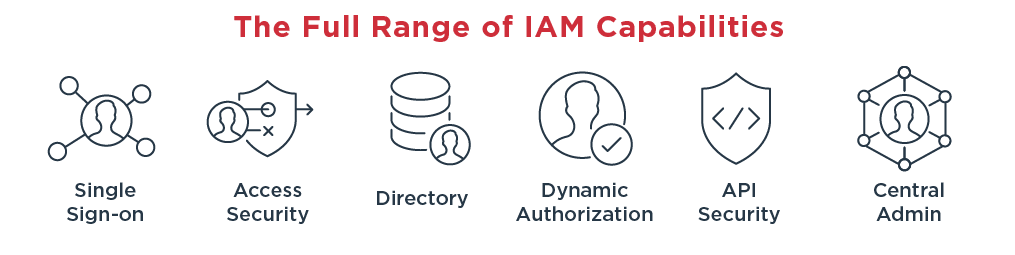
La gestion des identités et des accès sur cloud (cloud IAM) est une solution flexible qui vous permet d’authentifier les utilisateurs où qu’ils soient et à tout moment, mais aussi de sécuriser l’accès aux ressources sur le cloud, le SaaS, sur site et sur les API. Des solutions d’IAM existent pour les clients, les employés et les partenaires, et elles peuvent être intégrées pour fournir une solution complète aux assureurs tout en augmentant votre vitesse, votre agilité et votre efficacité.


Gestion des identités et des accès des clients (CIAM) pour les compagnies d’assurance

Les solutions de gestion des identités et des accès pour les clients (CIAM) proposent des options telles que l’enregistrement, la gestion du compte en libre-service, la gestion du consentement et des préférences, le single sign-on (SSO), l’authentification multifacteur (MFA), le contrôle des accès, les services d’annuaire et la gouvernance des accès aux données. Les solutions de CIAM sont évolutives et garantissent une expérience client sécurisée et sans frictions, que l’utilisateur se connecte depuis un ordinateur ou un appareil mobile. Les points de contact de l’expérience client que les services d’identité peuvent activer incluent :


  • En combien de temps peuvent-ils s’enregistrer et obtenir un devis ?

  • Des communications et des offres personnalisées

  • Des informations pré-complétées sur de longs formulaires

  • Sécurité multiple et options d’authentification, comme la biométrie et la vérification de l’identité/des pièces d’identité

  • Application du consentement des clients pour le partage des données et des réglementations sur la confidentialité


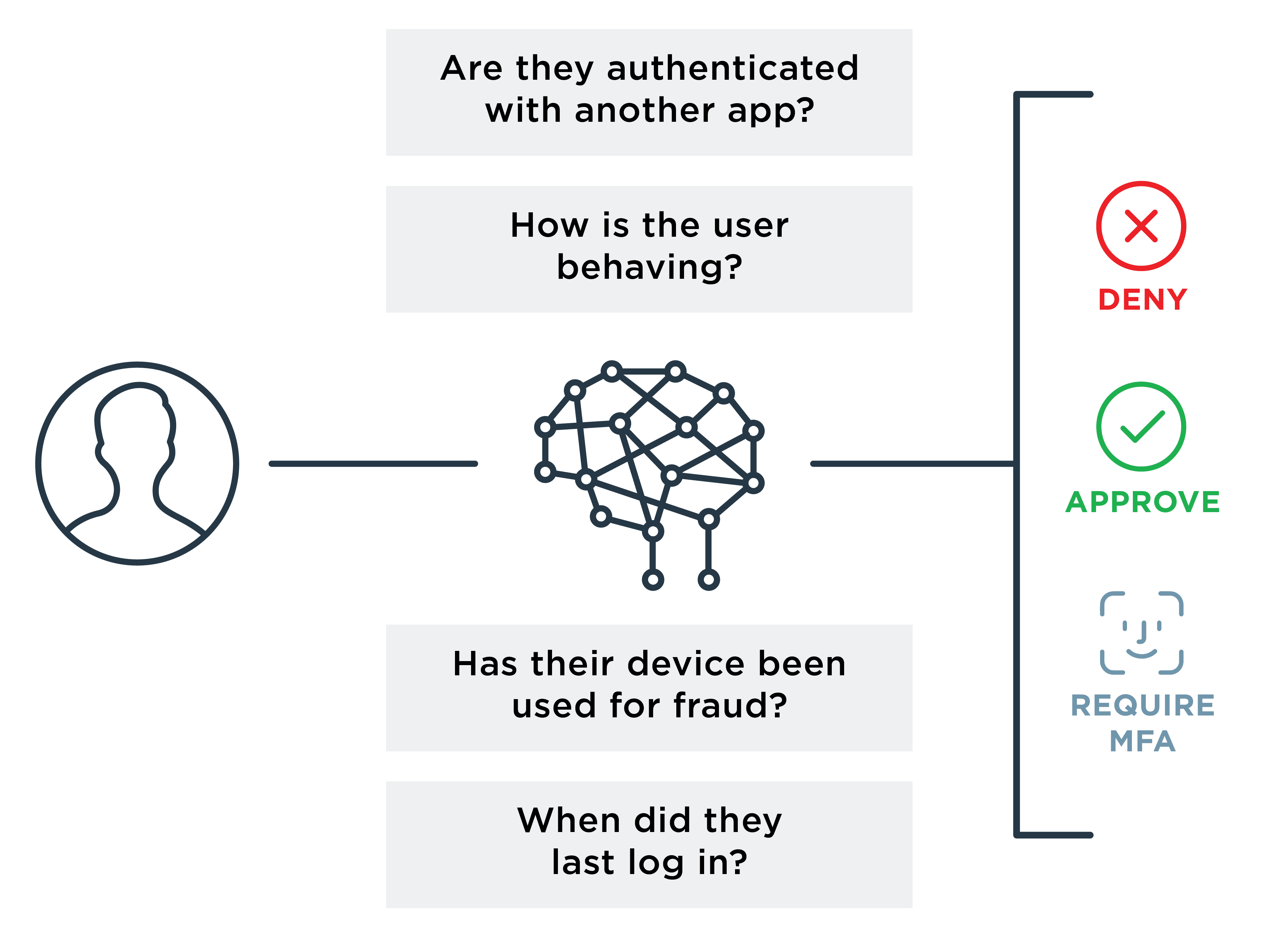
Le CIAM empêche également les fraudeurs d’usurper des comptes client. Si une connexion semble suspecte, des couches supplémentaires d’autorisation peuvent être requises pour refuser l’accès du fraudeur au compte.


Regardez cette courte vidéo pour découvrir le parcours client dans une entreprise de services financiers.


Welcome to the BX Finance User Journey demonstration, where we'll explore 5 use cases Demonstrating how the Ping Identity platform can deliver personalized, Seamless, and secure experiences for your online banking customers.
We'll start at the beginning of the user journey at online customer registration.
Jane is an existing customer of a fictional bank called BX Finance, but has never used their online banking platform.
First, we'll see Jane click the link to register for an online account.
BX Finance uses Ping to collect only the information needed to open an account, With additional information collected later through progressive profiling.
With Ping, all customer data collected is available through REST APIs to use for Personalization and can also be encrypted end to end.
BX Finance also allows customers like Jane to decide how they want to log in at the time of Registration.
Fed up with forgetting passwords?
Jane decides to use her MobileIron device or a one-time passcode.
A choice she can make during login.
To use her MobileIron device to log in, all Jane needs to do is download the BX Finance mobile Application with Ping Technology embedded.
Log in with her username and password for the first and last time.
And trust the device.
Jane is now registered.
And our experience continues to be seamless as she's automatically logged in following Registration.
Next, we'll demonstrate passwordless login and Single sign-on.
Jane clicks to sign in after entering her Username, Jane continues with her ideal login experience using Face ID while taking comfort In knowing that email and SMS one-time passcodes are always there, Just in case.
She submits, taps the customizable Push Notification on her phone, authenticates.
And she's in.
Now that she's signed in, Jane is able to Securely access any BX Finance application integrated with the Ping platform.
As an example, BX Finance provides a chatbot for customer service.
Integrated with Ping, Jane's very first digital interaction can be personalized by provisioning Jane's profile attributes, such as length of time as a customer to the service.
Jane closes the chatbot and continues to explore the website.
Next, we'll demonstrate transaction approval.
Jane navigates toward her next B2B finance experience, online money transfer.
Here, Jane enters the accounts, the amounts, and starts the transfer.
Then she completes it by clicking on the push notification and approving the transfer on a Fully customizable approval screen where the customers can view transaction details before Clicking approve.
Next, we'll demonstrate simple consent.
Management.
Jane navigates to Profile and Settings to view Her marketing communications preferences.
With the click of a button, Jane's preferences for SMS and email can be captured and stored Alongside her profile information, where consents can be enforced before communications Are sent and changed by Jane at any point in time.
Of course, enabling customers to self-manage preferences goes hand in hand with ensuring Those preferences are honored.
Let's flip over to view this scenario from the perspective of an email administrator at BX Finance using a popular email marketing tool.
After performing a quick search, you can see again that Jane's email and phone number are Visible, but her physical address is not.
With Ping, no matter what the request contains, only attributes with associated customer Consent will ever be accessible.
Finally, we'll demonstrate advanced consent management and Partner Identity Management.
Beyond honoring communications preferences, you can offer customers partner-based services while allowing them to choose both the partners they share data with and to what extent.
Here, we see common services like Mint and Zelle, but Jane decides to explore Services From any wealth advisor, a wealth management partner of BX Finance.
After reviewing their services, Jane decides to grant any wealth advisor access to view accounts Data, but only for her savings accounts.
From here, using Ping's federated single sign-on capabilities, Jane can navigate directly to any Wealth Advisor Portal without logging in.
Note that only the details of the account she chose to share are displayed, but also that the page is personalized with relevant profile data provisioned to the third-party service, such as her name in the welcome message and ZIP code for geographically Relevant investment seminars.
Finally, to see how consent is enforced with partners, let's flip over to view this scenario From the perspective of Amy Davis, an employee at any Wealth Advisor assigned to Jane's account.
In this case, any wealth advisor is leveraging The Ping platform for employee single sign-on into custom-built portals at some of the Biggest banks in the world, many of which are Ping's customers.
BX Finance is among these, and Amy clicks to log in.
BX Finance ensures that only certain individuals can access this wealth advisor Portal using Ping's authorization capabilities.
Here, we can see Amy look up Jane by her email address and again see that Amy's view is Limited to the savings accounts shared by Jane earlier.
This concludes our demonstration of how the Ping Identity platform can deliver personalized, Seamless, and secure experiences for your online banking customers.
To learn more, talk to your Account Representative or sign up for a free trial Today.




Gestion des identités et des accès des collaborateurs, des partenaires et des tiers pour les compagnies d’assurance

Les employés, les partenaires et les prestataires tiers ont également besoin d’expériences fluides pour faire leur travail. Étant donné que les compagnies d’assurance doivent fournir plusieurs niveaux d’accès pour des utilisateurs différents, une solution d’IAM pour les collaborateurs vérifie l’identité de l’utilisateur et contrôle l’accès aux données et aux ressources.


Gestion des accès pour s’assurer que les bonnes personnes puissent accéder aux bonnes ressources et à rien d’autre. Étant donné que même les utilisateurs vérifiés peuvent représenter une menace pour une entreprise, les données des clients et de l’entreprise doivent être protégées. Par exemple, il n’est pas souhaitable que les prestataires tiers aient le même accès et les mêmes privilèges que les directeurs. En plus de protéger l’accès aux données, les solutions d’IAM peuvent aussi vous permettre de paramétrer différents niveaux de privilèges afin que certains utilisateurs puissent consulter des informations tandis que d’autres peuvent les modifier.


Regardez cette courte vidéo pour découvrir comment les employés utilisent l’IAM dans une entreprise de services financiers.


This demonstration walks through a day in the life of an employee at BX Finance, A fictional financial services organization that has implemented Ping Identity.
In this demo, you'll see how implementing single sign-on, Adaptive multi-factor authentication, self-service, medium and fine-grained Authorization and transaction approvals help make BX Finance employees more productive and Secure.
Hazel Jacobs manages the BX Finance call center.
And has just received an email from her employer letting her know that a new way to Sign in is available.
Here, she sees that her employer has enabled passwordless login.
Behind the scenes, Ping's risk management service determines if Hazel can be let in with A username only, or if she needs to use certain authentication methods based on the risk she Presents.
Below, she can also see a Forgot Username Option, where she can recover her username via email.
There's also an option for trouble logging in, where she can use self-service options to reset Her password if it was needed for a certain app or unlock her account.
Next, Hazel logs in with her username.
And is directed to enroll in MFA.
She could skip this option for the next few weeks until the mandatory enrollment deadline.
But decides to enroll instead.
After downloading PingOne MFA app on her phone, she scans the QR code to pair her device.
After pairing, she can now see all the applications she needs to be productive as the Manager of the call center.
At any point in time, Hazel can use self-service options to select from a wide Range of authentication methods made available by her employer.
As the manager of the call center, Hazel has access to Salesforce, An application not available to her call center staff as they are third-party contractors.
Because Salesforce holds sensitive customer data, Hazel needs to strongly authenticate before access is granted.
Here, we see Hazel approving login for Salesforce using Face ID.
One of several passwordless authentication methods offered by Ping.
Within Salesforce, she clicks into a customer profile and is able to see all attributes associated with this particular customer, Jane Smith, including her full account number, Phone number, home address, and related contacts, which will be important here shortly.
Back at the application dock, Hazel logs into the call center application, which is also protected by strong authentication.
But because BX Finance uses Ping's recent authentication policy, Hazel can continue on uninterrupted.
Here, she sees a queue of customers waiting to be serviced.
And clicks into Jane Smith, the same customer she viewed in Salesforce.
Note that Jane's account number is obfuscated and several fields seen earlier in Salesforce Are blank.
This is because after a recent audit, BX Finance needed to strengthen security and improve regulatory compliance by limiting where And how customer data is exposed to call center contractors.
With fine-grain authorization from Ping, they can now limit which APPs can access customer Data on an attribute-by-attribute basis.
Furthermore, BX Finance also uses Ping's medium-grained authorization solution, Enabling them to restrict access to certain URLs and API methods.
So when Jane tries the Admin-UI access URL, she's denied as she's not in the group allowed to access that particular page.
Back in the call center app, Hazel sees that Jane would like to review her account details, but is not yet verified.
By clicking the Verify Identity button, Hazel can use Ping to send Jane a push notification Through the BX Finance mobile app shown here on Jane's phone.
Jane clicks the push notification and approves using Face ID.
Now that Jane has been verified, Hazel can access the account details needed to assist Jane with her account issue.
This concludes our demonstration of how the Ping Identity platform enables business agility, Allowing your employees to get more work done securely.

Comment l’IAM aide le secteur des assurances ?

Voici quelques éléments intéressants d’un cas d’étude sur une compagnie d’assurance santé nationale pour vous donner une idée de ce qu’une solution de CIAM peut faire pour votre compagnie d’assurance.


  • La solution est évolutive et performante pour gérer plus de 70 millions d’utilisateurs en même temps.

  • La solution s’intègre facilement avec les bourses de santé des états.

  • Les données en silos sont éliminées grâce à la gestion centralisée des identités.

  • La compagnie réduit les risques de faille et renforce la conformité aux réglementations.


Les compagnies d’assurance qui s’appuient sur les relations avec les partenaires ont un niveau supérieur de complexité pour sécuriser l’accès des partenaires. Ces partenaires ont besoin d’accéder aux applis de l’entreprise pour assurer leurs rôles, ce qui peut être fastidieux et vulnérabiliser vos données. Une solution d’IAM peut être créée sur mesure pour votre organisation.


Accompagnement tout au long de votre transformation numérique. Si vous avez des environnements informatiques hybrides et complexes, l’IAM peut vous aider à moderniser et à améliorer vos opérations. Trouvez une solution d’IAM pouvant s’intégrer avec vos single sign-on (SSO), WAM (web access management), authentification multifacteur (MFA), annuaires et autres, d’ancienne génération.


Réduit la charge de travail pesant sur le département informatique de l’entreprise. Permet aux filiales et aux partenaires de gérer leurs propres employés et/ou clients, pour par exemple ajouter, supprimer et mettre à jour leurs informations. Vous pouvez encore garder le contrôle sur les administrateurs de provisioning, pour réduire le risque qu’une personne ne travaillant plus pour un partenaire puisse accéder à votre système.


Conformité aux réglementations. Les réglementations s’intéressent typiquement à une authentification forte, le stockage des données clients, les fichiers de consentement et la sécurisation des accès. Concernant les compagnies d’assurance, ces réglementations peuvent inclure le Health Insurance Portability and Accountability Act (HIPAA) et le 21st Century Cures Act.


Simplifie l’intégration des clients et la personnalisation. L’orchestration des identités vous permet de fournir aux clients une expérience fluide lorsqu’ils s’enregistrent, qu’ils demandent des devis, qu’ils sélectionnent des méthodes d’authentification, qu’ils mettent à jour leurs comptes et tout au long de leur parcours client. Collectez des données en toute sécurité pour suivre les étapes importantes du client, comme les mariages et les naissances, pour savoir s’il a besoin de nouvelles assurances.

Partager cet article:
Ressources connexes

Lancez-vous dès Aujourd'hui

Contactez-Nous

sales@pingidentity.com

Découvrez comment Ping peut vous aider à offrir des expériences sécurisées aux employés, partenaires et clients dans un monde numérique en constante évolution.