How to Prevent and Mitigate Fraud -
Fraud Risk Management Guide

Apr 11, 2024
-minute read
Headshot of Maya Ogranovitch Scott Ping Identitys Solutions Architect
Senior Product & Solutions Marketing Manager

Every year, businesses in the retail and financial services industries lose billions of dollars to data breaches and fraud, and the threat of future incidents continues to escalate. In the ecommerce space alone, companies lost $38 billion to fraud in 2023, and are forecasted to lose a staggering $362 billion between 2023 and 2028. Meanwhile, in financial services, 25% of companies lost over $1 million to fraud last year.


Whether such exploitation is initiated by external parties or internal bad actors, these events can put customers’ private information at risk and be extremely costly for organizations to resolve. As such, many enterprises are focused on establishing fraud prevention and mitigation measures that can help them avoid the risk of breaches and fraud.


Fraud risk management is a critical component of a company’s ongoing success and longevity in the modern business environment. Fraud will not simply cease on its own, so businesses must implement a proactive approach that protects their sustained business growth and customer trust. The majority of security, IT, and business decision makers (76%) see identity fraud risks as their top priority in managing fraud. With that in mind, let’s discuss the best ways to manage fraud risk, especially when it comes to identity threats.

What is Fraud Risk Management?

Fraud risk management refers to the strategy a business adopts to mitigate threats of fraud throughout the organization. It’s a proactive approach that requires counter-fraud measures to be integrated across the entire user journey for effective prevention and mitigation of adverse events.


Due to the prevalence and cost of identity fraud specifically, two of the most common threats this strategy aims to address are new account fraud and account takeover fraud, which could put sensitive employee and client data at risk if successful. Account takeover occurs when compromised credentials are used to gain unauthorized access to an account, while new account fraud involves fraudsters creating accounts with malicious intent.

Why Managing Fraud Risk is Crucial

There’s a lot on the line for businesses when it comes to dealing with data breaches and fraud. By some estimates, companies lose 5% of their revenue to fraud each year. 


The consequences of fraud often extend further than immediate financial loss. It can negatively impact an organization’s reputation and cause them to lose customer loyalty and trust, harming their business performance over the long run. 


There are also legal and regulatory implications for businesses that fail to manage fraud effectively, which can result in further losses through penalties, fines, or other sanctions after a breach or other security incident.

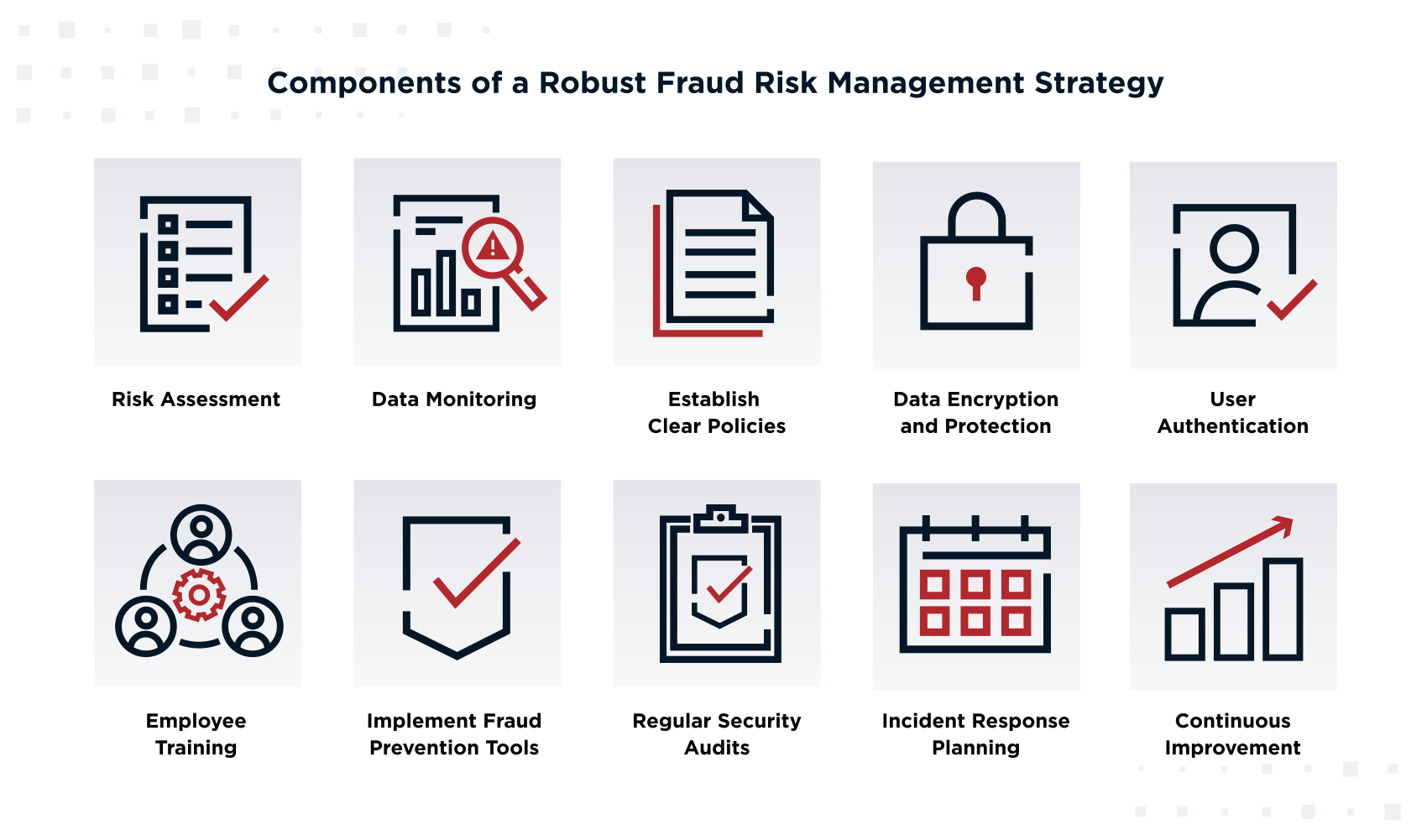
Components of a Robust Fraud Risk Management Strategy

Fraud risk management is not a one-dimensional approach that businesses can implement as an afterthought. To be effective, it must be a proactive strategy that helps organizations identify their vulnerabilities and evolve their counter-fraud strategies as fraudsters’ tactics advance.


Risk Assessment

Businesses need to conduct a comprehensive analysis to identify potential fraud risks specific to their organization. This might start with a look at past fraud incidents that have occurred, as well as assessing any existing counter-fraud policies and measures that are already in place.


Fraud can be targeted at employees in any department, though business leaders should take a closer look at their operations and speak with key stakeholders to recognize where the biggest vulnerabilities remain within the organization – whether it be in accounting, sales, or elsewhere. Compromised employee accounts are often the entry point for major data breaches, which then lead to various fraudulent activities. When it comes to customer accounts, fraud attempts may target the accounts of customers in good standing or occur through the creation of new accounts, so businesses should look at historical fraud trends to determine patterns of fraudulent activity.


Data Monitoring

Having robust systems in place to track real-time transactional and user data makes it easier to recognize and stop a fraud attempt before a loss can occur. Real-time monitoring of such information allows for prompt intervention, helping an organization become more proactive rather than reactive to threats.


Based on the typical patterns of user behaviors and activities, businesses are better able to detect anomalies and flag them for further review. For instance, a company looks at data on keystrokes, scrolling, mouse movements, touchscreen interactions, and other factors to recognize when activity appears non-human and produced by bots instead, or simply uncharacteristic of the user’s normal behavior.


Establish Clear Policies

Within the organization, there should be clear and well-defined policies for fraud detection, prevention, and response. The Association of Certified Fraud Examiners (ACFE) reports that 49% of fraud events occurred due to a lack or override of internal controls, so the importance of creating and enforcing these policies cannot be understated.


Such policies should be communicated to the necessary stakeholders to ensure proper adoption of the fraud risk management strategy. This might include specific conduct that employees within a certain department need to take to prevent fraud, as well as how they should report or elevate suspected fraud attempts.


Data Encryption and Protection

A business should also implement strong data encryption practices to secure sensitive customer information they might store like their credit card information, bank account details, Social Security numbers, and more.


Not only can this build trust with customers when they feel like their data is safeguarded from unauthorized access, but it can also help organizations ensure compliance with relevant data protection regulations.


User Authentication

Companies can strengthen their fraud risk management by implementing robust user authentication processes like multi-factor authentication (MFA) and adaptive techniques. This helps to verify users’ identities as they access critical functions such as logging in, changing account details, or making a transaction–common targets for fraudsters.


MFA and other similar authentication techniques add a layer of security to accounts that prevent the risk of unauthorized access to sensitive customer information. When these methods are implemented, fraudsters need more than just a compromised password for successful authentication, like a knowledge-based PIN, a security token, or a biometric trait.


Icons representing fraud risk management strategy elements


Employee Training

Employees should receive ongoing training on how to recognize and address fraud-related threats, typical fraud schemes, and the importance this has to the organization’s overall success. Companies may want to offer more personalized training for certain departments or employees depending on their roles and responsibilities.


Proper education and awareness are essential to keeping employees up-to-date on the latest tactics and techniques fraudsters are using. The more familiar employees are with common warning signs and indicators, the more quickly such incidents can be reported and investigated.


Implement Fraud Prevention Tools

Utilizing advanced fraud prevention solutions that are tailored to a company’s industry and business model can be a crucial component of its overall fraud prevention strategy. Such tools give businesses great visibility into the entire user journey–not just when they’re logging in or making a transaction.


In addition, an advanced tool that is flexible and adaptive makes it easy for companies to adjust their approach as needed to evolve with changing trends for fraudulent behaviors and techniques.  At the same time, these solutions are often highly streamlined and help organizations implement robust counter-fraud measures without detracting from the user experience.


Regular Security Audits

Organizations need to conduct periodic audits to assess the effectiveness of their fraud prevention measures. In today’s fast-paced environment, what was once a robust risk management framework a year or two ago may not hold up in today’s dynamic landscape.


With regular audits, companies can recognize where they are most vulnerable and quickly make necessary adjustments to bolster their security posture.


Incident Response Planning

In the event that a fraud incident does occur and there’s been a breach or other cybersecurity event, companies should have a robust incident response plan in place to ensure swift and coordinated action from the team. 


Employees should be made aware of how they should handle a case of suspected fraud, who they need to report it to, and what documentation is required. Further, the protocols should include how such cases will be investigated and reported to stay compliant with security regulations.


Continuous Improvement

As we’ve discussed, an effective fraud risk management strategy should not be static. Fraudsters are constantly employing new tactics to discover vulnerabilities that they can take advantage of, so businesses need to respond accordingly to stay proactive. 


Organizations should establish a feedback loop or auditing system for ongoing refinement of their fraud risk management strategy based on real-world incidents and evolving threats.


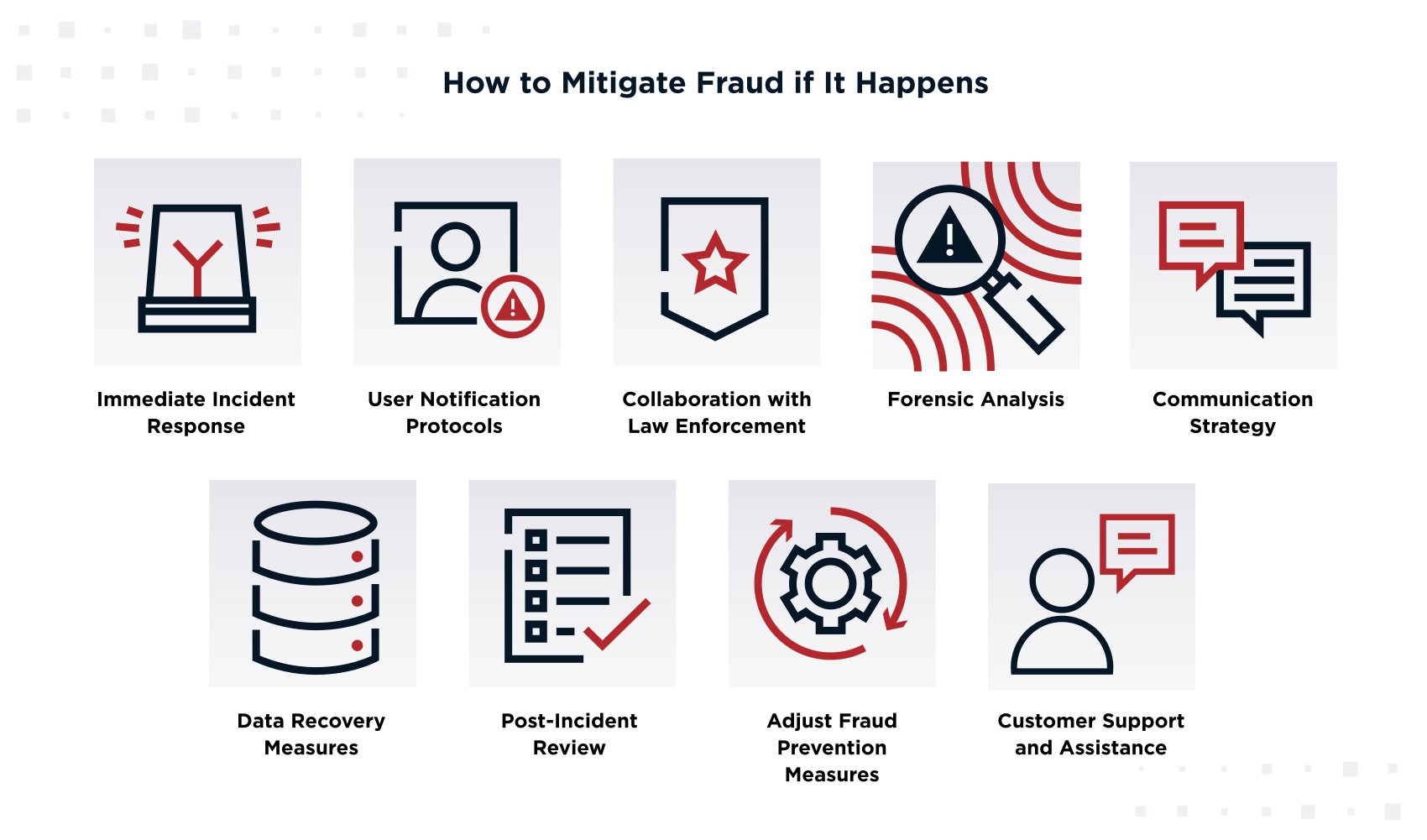
How to Mitigate Fraud if It Happens


A robust fraud prevention strategy is necessary to help organizations foster an environment that effectively safeguards against fraudulent activities. However, businesses should not get so comfortable that they assume they could never be the victim of a cybersecurity attack.


Thus, organizations need to be prepared and have the protocols and systems in place to help mitigate fraud when it does unfortunately occur.


1. Immediate Incident Response

First things first, companies need to have an outlined step-by-step incident response plan to swiftly address and contain active fraud incidents. In these cases, every second counts, so it’s important that the team knows what to do for the best chance at minimizing potential losses.


The quicker the company responds to the incident, the easier it will be to contain and avoid further loss. How the team responds may depend on the nature of the incident, though having a general outline in place will provide some guidance on what actionable steps should be taken to secure the system.


2. User Notification Protocols

A necessary component of a fraud mitigation response is to alert users who may have been affected by the incident. How this is handled is extremely important to mitigate potential damage and reinforce users’ trust in the organization, even in negative circumstances.


For instance, users should be informed promptly so they can take the proper steps to secure their accounts, like changing their passwords or enabling multi-factor authentication.


3. Collaboration with Law Enforcement

Collaborate with law enforcement agencies when a fraud event has occurred to initiate legal action against the perpetrators. Though this may seem like a logical step, of the 2,110 cases the ACFE studied, only 58% of cases were referred to law enforcement.


These cases can be difficult to prosecute, though working closely to support any investigations will help secure justice for any victims and can deter future incidents from occurring.


4. Forensic Analysis

A thorough forensic analysis needs to be conducted to understand the scope and nature of the incident. This may require the company to hire independent forensic investigators to get to the bottom of the issue, though the data and information collected throughout this process will help the organization understand the extent of the damages, which systems and users were affected, and how the situation should be remedied.


Infographic instructions on mitigating fraud


5. Communication Strategy

Clear communication about these incidents is essential, so companies should develop a communication strategy to maintain transparency with stakeholders, including customers, partners, and regulatory bodies.


Though the incident may not paint the organization in the best light, it’s important to be honest and clear about what happened, the response that was taken, how users were impacted, and what is being done to prevent similar incidents in the future.


6. Data Recovery Measures

Measures should be implemented to recover compromised data and secure systems from future vulnerabilities. The forensics team can help the organization identify any data that was backed up at the time of the incident so it can be properly restored.


7. Post-Incident Review

After the incident, the business needs to conduct a comprehensive review of the incident, identifying weaknesses in its existing fraud prevention strategy that need to be adjusted. This might also include assessing the team’s response and identifying anything they could have done differently.


8. Adjust Fraud Prevention Measures

Based on the post-incident review, companies should adjust and strengthen fraud prevention measures to prevent similar incidents. As the FTC puts it, “The only thing worse than a data breach is multiple data breaches,”, so organizations need to respond appropriately to avoid future recurrence.


9. Customer Support and Assistance

Lastly, there needs to be ongoing customer support available to affected users. The company should offer assistance and guidance in recovering from the incident.


This can take many forms, including a dedicated page on the website answering common questions about the incident, offering a free year of credit monitoring if users’ Social Security numbers or other financial data was compromised, or a hotline to call for further information.

Conclusion

Fraud risk management and mitigation techniques help organizations strategically address the threats of fraud before an incident can occur. While it requires a multi-faceted approach and commitment across all departments within an organization, the consequences of fraudulent activity are too big to ignore.


With this in mind, businesses should adopt a proactive and comprehensive approach to fraud mitigation to avoid the risk of financial loss, legal ramifications, and loss of customer trust that occur as a result.


The Ultimate Guide to Online Fraud Prevention

Finding the right balance between a seamless customer experience and robust fraud mitigation is essential for creating a frictionless yet secure environment. When done correctly, it allows you to improve customer acquisition, retention, loyalty, and trust without compromising your system’s security.


For more information on how customer identity and access management (CIAM) can help bring together your counter-fraud strategies to better equip you to mitigate fraud risk at your organization see our ultimate guide. See how you can address identity fraud while creating better user experiences.

Share this Article:
Related Resources

Start Today

See how Ping can help you deliver secure employee, partner, and customer experiences in a rapidly evolving digital world.