What is Web Access Management (WAM)?

Dec 30, 2021
-minute read

Web access management (WAM) is a security framework that authorizes user access to web-based applications. Pioneered in the 1990s and 2000s, WAM addressed the growing need for enterprises to control access to web applications as digital systems gained prominence. However, as business demands shifted toward mobile, cloud, and API-based technologies, traditional WAM solutions have struggled to keep pace.


Migration from legacy web access management to modern identity and access management (IAM) solutions offers a solution to these challenges. This transition reduces operational costs, enhances security, improves user experiences, and ensures scalability. Let’s explore the history of WAM, its limitations, and why IAM solutions are the future.

Key Takeaways


  • Legacy WAM systems struggle to secure mobile, API, and cloud-based applications.
  • Modern IAM solutions improve scalability, security, and the user experience by supporting features like multi-factor authentication (MFA) and single sign-on (SSO).
  • Migrating from WAM to IAM reduces reliance on outdated systems, saving costs and enhancing compliance with evolving protocols.
  • IAM offers holistic capabilities, including identity verification, API security, and passwordless authentication.

The Evolution of Web Access Management (WAM)

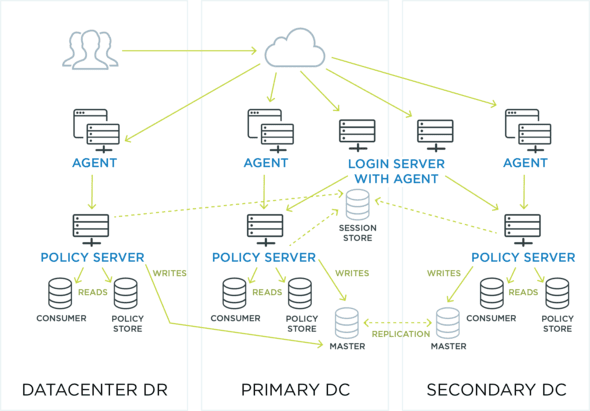
WAM solutions were designed during an era when enterprise IT systems primarily operated on-premises. Security concerns were confined to local networks, and access management largely relied on network perimeter defenses. This model worked well when employees accessed resources using corporate-issued devices within secure office networks.


Diagram showing the traditional WAM delivery architecture


However, the advent of cloud computing, remote work, and mobile devices transformed how users interact with enterprise systems. Employees now expect seamless access to applications from anywhere, often using personal devices. This shift has rendered the static, agent-based architecture of legacy WAM systems inadequate for today’s dynamic environments.


Modern access management frameworks address these gaps by focusing on identity-driven security models. These systems integrate seamlessly with cloud and API infrastructures, providing enhanced capabilities for distributed workforces and hybrid environments.

Why is Legacy WAM Less Effective Today?

Legacy WAM systems rely on agents installed on web servers to enforce access controls. While effective for on-premises applications, these systems encounter several limitations:


  • Lack of Cloud and API Compatibility: Legacy WAM cannot secure cloud-native applications or API endpoints effectively.
  • Increased Maintenance Overhead: Patch-and-fix models for legacy systems burden IT teams with ongoing maintenance costs.
  • Security Vulnerabilities: Outdated WAM products are more susceptible to modern threats like phishing and session hijacking.

Some legacy WAM systems have even reached their end-of-life, compelling enterprises to adopt modern alternatives.


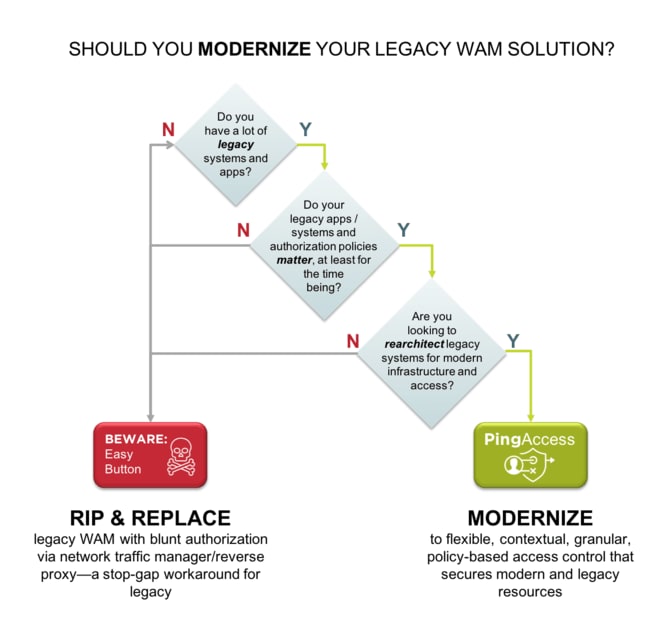
Flowchart helping you decide if you should modernize your legacy WAM solution Decision tree leading to rip and replace or modernize

What Sets Modern IAM Solutions Apart?

Modern identity and access management (IAM) systems stand out as a comprehensive solution for managing access across diverse application ecosystems, ranging from cloud-based services and SaaS platforms to on-premises software. Unlike legacy web access management (WAM) solutions, IAM is designed to address the dynamic requirements of modern enterprises. These systems provide robust security measures, centralized administration, and unparalleled flexibility, ensuring that businesses can meet evolving security and operational needs.


Enhanced Security

One of the defining features of modern IAM systems is their ability to offer enhanced security through advanced technologies. Multi-factor authentication (MFA) adds an extra layer of protection by requiring users to verify their identity using multiple factors, such as a password, a device, or a biometric identifier. Additionally, risk-based adaptive access continuously evaluates contextual signals—such as device type, geographic location, and login behavior—to determine whether access requests should be granted, flagged, or denied. This real-time evaluation helps prevent unauthorized access by recognizing anomalies that indicate potential security threats.


Centralized Administration

Modern IAM systems simplify the management of access policies and auditing through centralized administration. Unified dashboards enable IT teams to set, monitor, and enforce access controls across the entire organization from a single interface. This centralized approach reduces the complexity of managing disparate systems and enhances visibility into access events, making it easier to identify and address vulnerabilities. By streamlining administrative workflows, IAM solutions save time, improve operational efficiency, and support compliance efforts with evolving regulatory standards.


Flexibility and Scalability

Unlike the rigid frameworks of legacy WAM systems, modern IAM solutions are built with flexibility and scalability in mind. They support dynamic deployment models that cater to hybrid environments, allowing organizations to seamlessly manage access for both on-premises and cloud-based resources. As businesses grow or adopt new technologies, IAM systems can scale to accommodate additional users, devices, and applications without compromising performance or security. This adaptability ensures that organizations remain future-proof, capable of evolving alongside technological advancements and market demands.


Integration with Open Standards

Modern IAM solutions leverage open standards such as OAuth 2.0, OpenID Connect, and SAML to enable secure and seamless authentication. OAuth 2.0, for example, allows third-party applications to access resources on behalf of users without sharing credentials, while OpenID Connect facilitates user authentication and single sign-on (SSO). These protocols not only enhance security but also simplify integration with third-party applications, enabling token-based authentication and supporting the shift toward passwordless workflows. By adopting open standards, IAM solutions ensure compatibility with a wide range of technologies and provide businesses with the flexibility to implement advanced access controls effortlessly.


Modern IAM systems represent a significant leap forward in access management, offering the tools enterprises need to secure their digital ecosystems while improving efficiency and user experience.


Benefits of Migrating to IAM Solutions

Extended Capabilities

Modern IAM solutions go beyond WAM by integrating features like identity verification, consent management, and API security. These capabilities allow businesses to secure access across an ever-expanding range of applications and devices.


Lower Costs and Better Scalability

Cloud-based IAM eliminates the need for costly on-prem infrastructure, offering pay-as-you-go models that scale with business needs. Transitioning to IAM can reduce IT overhead while improving system performance and reliability.


Improved User Experience

IAM solutions streamline authentication through SSO and passwordless login options, reducing the friction associated with traditional access methods. By enabling faster rollouts of new apps, IAM enhances workforce productivity and customer satisfaction.


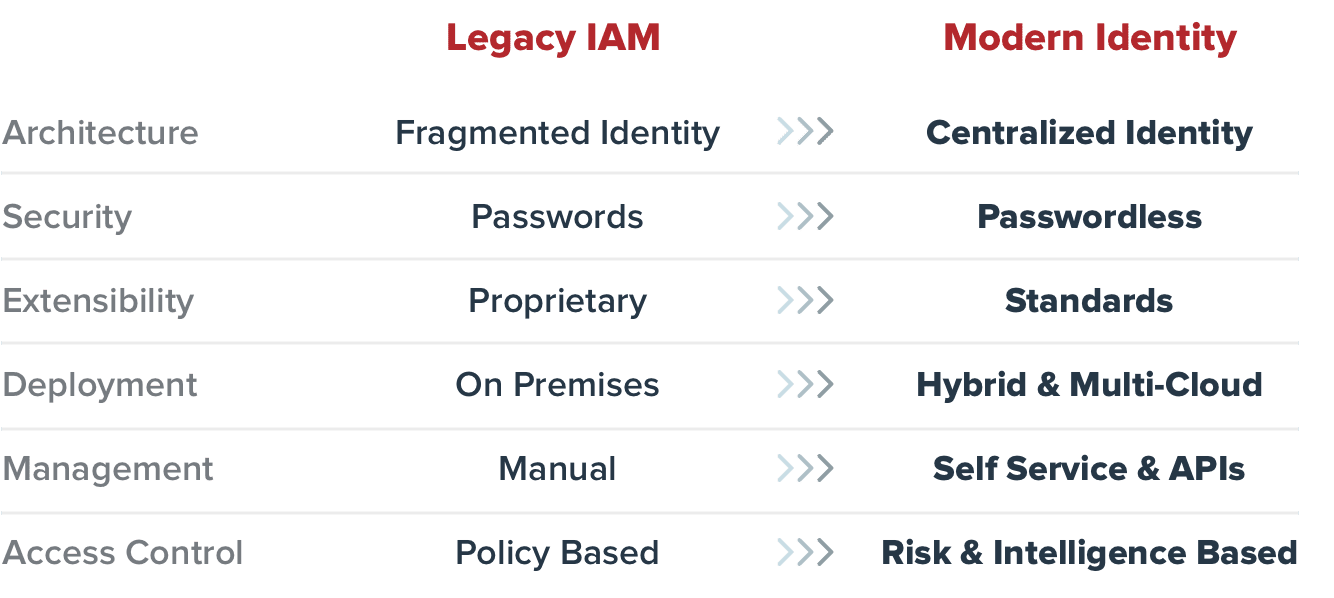
Chart showing the difference between wam and iam solutions

Steps to Transition from WAM to IAM

Evaluate Current Systems

The first step in transitioning from legacy WAM to a modern IAM solution is to thoroughly evaluate your current systems. This assessment involves mapping out the existing WAM architecture and identifying specific areas where it fails to meet your enterprise's evolving needs. For instance, determine whether your current solution supports modern business requirements, such as securing cloud-native applications, mobile devices, and APIs. Pinpointing gaps in functionality, such as compatibility with identity-driven security models or integration with modern authentication protocols like OAuth 2.0, will help you understand the scope of the migration and ensure no vulnerabilities are overlooked.


Choose a Scalable IAM Platform

Once you have a clear understanding of your system's limitations, the next step is selecting an IAM platform that aligns with your organization's current and future goals. Look for a solution that provides scalability, enabling your enterprise to grow without outgrowing its access management capabilities. The ideal IAM platform should integrate seamlessly with existing infrastructure, while supporting cloud, hybrid, and on-premises deployments. Additionally, prioritize solutions that offer advanced features like multi-factor authentication (MFA), single sign-on (SSO), and adaptive access control to address modern security challenges effectively. A well-chosen IAM platform not only meets technical requirements but also drives operational efficiency and reduces long-term costs.


Implement Gradual Migration

Shifting from WAM to IAM is a significant undertaking, and a gradual, phased migration can help minimize disruptions. Start by using hybrid deployment models that allow both legacy and modern systems to coexist temporarily. This approach ensures that critical business functions remain uninterrupted while the transition progresses. Begin with non-critical applications or user groups, gradually moving to high-priority systems as confidence in the new platform grows. Throughout the migration process, continuously monitor for any issues and make necessary adjustments to ensure a smooth transition. This step-by-step strategy reduces the risk of downtime, data breaches, or operational setbacks.


Educate Stakeholders

Finally, successful IAM adoption hinges on the effective education and engagement of stakeholders, including employees, IT teams, and partners. Comprehensive training on the new access protocols and security practices is essential to building trust and ensuring compliance. For employees, this includes understanding how to use features like SSO and MFA, recognizing phishing attempts, and following best practices for secure authentication. IT teams, on the other hand, need to be proficient in managing the new IAM platform, from setting policies to monitoring access requests. By fostering a culture of awareness and collaboration, your organization can maximize the benefits of modern IAM while minimizing user resistance and potential security risks.


By following these steps, organizations can ensure a seamless and secure transition from outdated WAM systems to modern IAM solutions, setting the stage for enhanced security, scalability, and user satisfaction.

Why Modern IAM is the Future

Web access management served its purpose during the early days of web application adoption, but the evolving technological landscape has outgrown its limitations. Modern IAM solutions address the need for scalable, secure, and flexible access management, empowering businesses to thrive in today’s digital-first environment.


Share this Article:
Related Resources

Start Today

See how Ping can help you deliver secure employee, partner, and customer experiences in a rapidly evolving digital world.