
Identity for AI
Announcing:
Runtime Identity for
the Agentic Era
Give AI agents trusted identities, real-time authorization, and human oversight - so they act with purpose, not risk.
Identity for AI
Announcing:
Runtime Identity for the Agentic Era
Give AI agents trusted identities, real-time authorization, and human oversight - so they act with purpose, not risk.
We work with the world’s top brands


We work with the world’s top brands
The Challenge
AI Agents Create Opportunities & Add New Risks
The Rise of Agentic Commerce
Agentic AI is revolutionizing customer interactions. You need new channels for agentic users, support for secure automated buying, and improved fraud prevention strategies.
The Workforce Redefined
The autonomous digital workforce promises new ways of working and efficiency gains for organizations that can effectively discover, manage, secure, and govern digital workers.
Adversarial AI Is Booming
Most systems can’t distinguish between a legitimate agent and a malicious bot. Legacy threat protection may filter out helpful agents, but opening the door to agentic users may create unwanted vulnerabilities.
Login is No Longer the Security Boundary
AI agents act autonomously in real time. Securing them with static credentials and session-based trust leads to over-privileged access and questionable accountability.
The Solution
Identity Built for How AI Agents Work
AI agents act continuously—triggering workflows, making purchases, and making decisions. But they aren’t people, so managing their identities like humans doesn’t cut it.
Here’s how we help you enable and secure agentic AI:
- See What Agents Are Doing: Discover and track your AI agents across your digital ecosystem—no shadow IT, no surprises.
- One Platform, Complete Control: Onboard, organize, and manage agents and humans at runtime, aligning to context, policy, and execution in real time.
- Enforce Runtime Control: Continuous, contextual authorization and least-privilege access in the moment, not just at login.
- Keep Humans in the Loop: Maintain oversight and accountability with guardrails that put people in control of high-impact actions.
- Stay Ahead of New Threats: Detect and block risky agent behavior in real time—before it becomes a problem.
How to Establish Trust with AI Agents
Securing, governing, and supporting AI agents takes a comprehensive,
purpose-built set of capabilities. Here’s how we do it:
How to Establish Trust with AI Agents
Securing, governing, and supporting AI agents takes a comprehensive, purpose-built set of capabilities. Here’s how we do it:
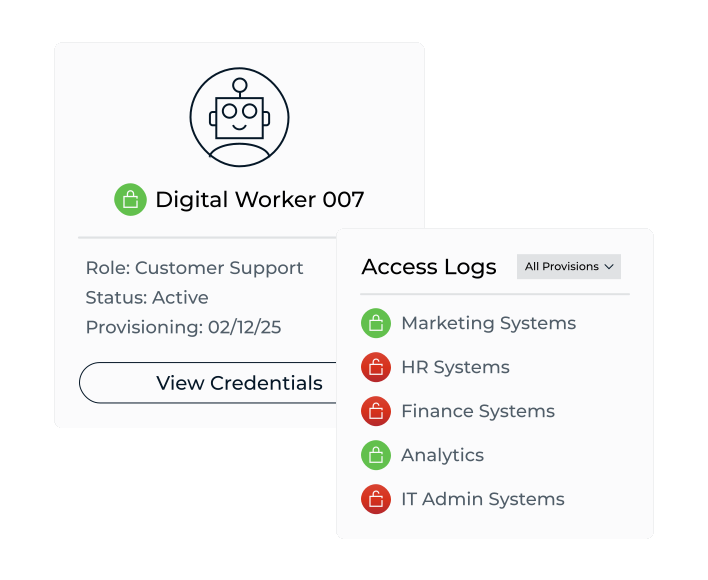
Easily register, manage, and secure AI agents as first-class identities—each with unique credentials, clear roles, and tight access controls from start to finish.
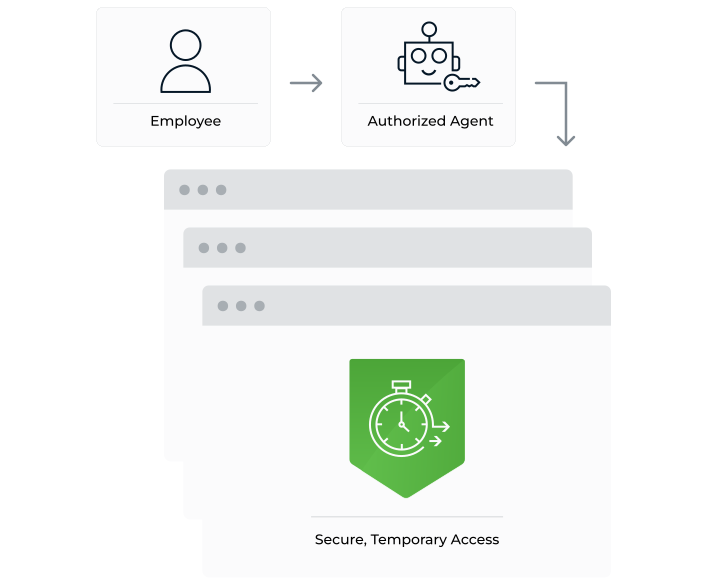
Evaluate every agent action in real time—issuing narrowly scoped, delegated authority based on context, risk, and intent, not static sessions or roles.
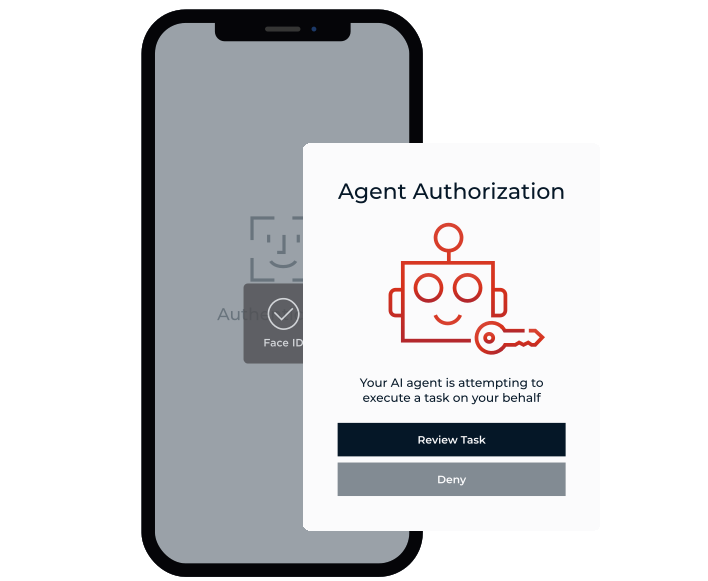
Critical task? Human approval required. Define exactly what agents are allowed to do—with human approval and step-up verification applied dynamically to high-risk actions, not after the fact. Our built-in workflows reduce risk and ensure compliance—so AI never oversteps.
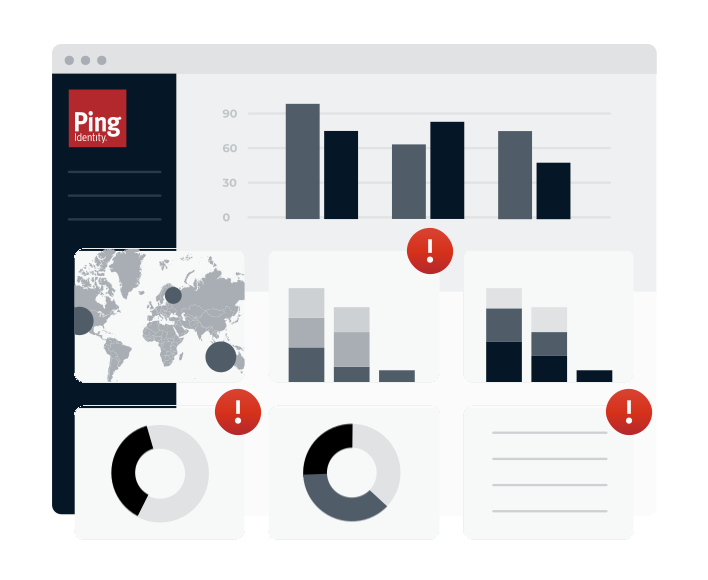
Go beyond “good vs bad bots” to continuously evaluate agent identity, behavior, and intent—enabling trusted agents while stopping misuse in real time.
Every agent action is evaluated, logged, and enforced against policy in real time—eliminating blind spots and containing risk as it happens in the moment.
Consistently manage access to MCP servers and resources, enforcing least-privilege and monitoring how agents interact with your tools and data in real time.
Dive Into the Details
From granting access to scoping responsibilities, check out the core capabilities that solve the real-world challenges of agentic AI.
Don’t Just Take Our Word for It
Don’t Just Take Our Word for It
Image Carousel
AI Agents Are Here—Is Your Identity Strategy Ready?
As AI agents take on real work, they need real identity standards. With Ping, you can give agents trusted access and clear accountability—putting you in control, right from the start.
Frequently Asked Questions
Choosing and implementing an identity solution for agentic AI is a big decision. We’ve got clear answers to common questions to help you get started. Because your success is our priority.
Agentic AI refers to autonomous software agents that can plan, reason, and act on behalf of humans or systems. These agents make decisions, execute tasks, and interact with enterprise resources independently. Securing them requires an identity foundation that ensures every interaction is authenticated, authorized, and accountable.
Runtime identity is the control plane where access and authentication are continuously aligned to context, policy, and execution. Traditional, session-based trust was built for static systems, but AI agents demand evaluation in the moment and every action must be accountable. As agents are rapidly deployed across customer, workforce, and partner identity systems, identity has to live where the action happens—at runtime.
Allowing AI agents to use human credentials breaks accountability and weakens security controls. It also creates compliance risk by blurring who’s responsible for specific actions. Each agent must operate under its own scoped, delegated identity to ensure every action is properly verified, governed, and attributed.
AI agents are already here—automating workflows, analyzing data, and interacting with enterprise systems. As adoption accelerates, organizations need identity controls to manage how these agents authenticate, access resources, and act on behalf of users. Establishing trusted agentic identity foundations now reduces security risk and prepares your organization for the agent economy.
We simplify agent lifecycle management through automated provisioning, tailored access delegation, centralized controls, and clear deprovisioning processes. This ensures every AI agent maintains appropriate access and all activity remains visible, monitored, and auditable throughout its lifecycle.
As AI agents perform tasks and make decisions on behalf of humans, human-in-the-loop controls ensure that people are in charge of sensitive actions. Approval checkpoints are embedded in agent workflows so that critical operations are explicitly reviewed and authorized by an accountable person. These controls provide transparency, prevent unintended actions, and preserve trust across all agentic activity.
Agent Gateway establishes a gateway for MCP servers and resources, and introduces a security layer between agents and the systems they interact with. It enforces least-privilege access, monitors how agents use connected tools and data, and prevents misuse. This gives organizations unified visibility and policy-based control over all agent activity.
Yes. Identity for AI extends Ping Identity’s platform and integrates seamlessly with your current identity framework. It supports standards-based interactions and works with your existing authentication, authorization, and access governance tools, ensuring continuity across your current identity infrastructure.
Start by visiting developer.pingidentity.com/ai for learning resources and guided examples on securing AI agent identity. If you want to dig deeper into how Identity for AI can help your organization embrace the agent economy with security and trust, reach out to your Ping Identity representative or request a demo.
Gartner and Peer Insights™ are trademarks of Gartner, Inc. and/or its affiliates. All rights reserved. Gartner Peer Insights content consists of the opinions of individual end users based on their own experiences, and should not be construed as statements of fact, nor do they represent the views of Gartner or its affiliates. Gartner does not endorse any vendor, product or service depicted in this content nor makes any warranties, expressed or implied, with respect to this content, about its accuracy or completeness, including any warranties of merchantability or fitness for a particular purpose.