Improve Healthcare Cybersecurity and Experiences With Unified Identity and Access Management (IAM)

Mar 13, 2024
-minute read
Headshot of Shasta Turney
Director, Healthcare Solutions Marketing

Today’s healthcare organizations must address a multitude of high-priority challenges. With competition at an all-time high, healthcare organizations are under pressure to meet patient and member demands for easy, personalized digital experiences. Healthcare providers, workers, and partners are also insisting on seamless digital experiences that streamline their work for greater operational efficiency.


Meanwhile, the healthcare industry is facing unrelenting cyberattacks that wreak havoc upon patient care, budgets, and business operations. According to the 2024 ForgeRock Breach Report (ForgeRock is now a part of Ping Identity), healthcare systems have remained the number one breach target for over five years.  Electronic health records containing personal identifiable information (PII) and personal health information (PHI), such as medical records and patient data, are highly sought after by cybercriminals. Unauthorized access is the root cause of most breaches – emphasizing the dire need for modern digital identity cybersecurity.


Unfortunately, most healthcare organizations are using legacy systems that weren’t built to deliver personalized experiences and secure access for millions of diverse identity types to on-premises, cloud, and SaaS apps from any device, at any time.


Implementing a modern, HIPAA compliant identity and access management (IAM) platform should be on every healthcare leader’s radar. Modern IAM is proven to protect sensitive information and data by drastically reducing cyberattacks. It also improves user experience and engagement, such as removing friction from the authentication process, all while protecting sensitive data against ransomware, fraud, and other cyberattacks. HIPAA-compliant IAM platforms also enable healthcare organizations to meet compliance requirements for regulations such as HIPAA, TEFCA, HITECH, the 21st Century Cures Act, and many more.


The following are just a few ways that healthcare leaders like you can use healthcare IAM to improve cybersecurity and digital experiences for your patients, members, workforce, and partners.
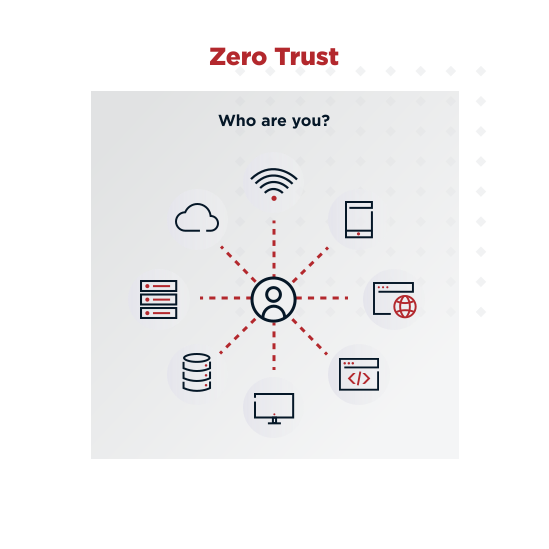
1. Build Zero Trust Cybersecurity Workflows With No-Code Identity Orchestration

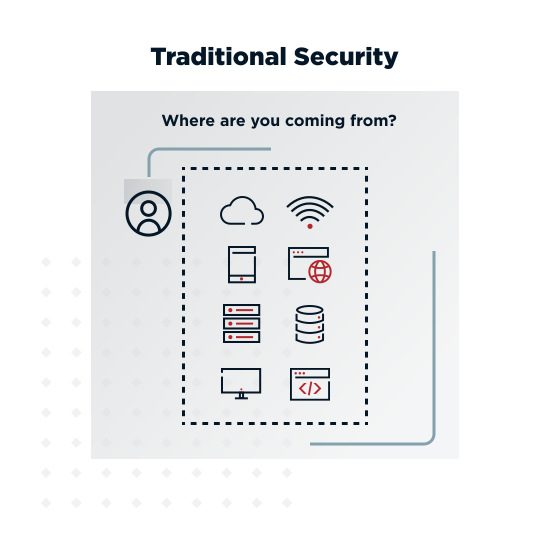
Healthcare data security is paramount. Healthcare leaders are adopting a Zero Trust approach to cybersecurity. Zero Trust is a security framework designed around the principle of “trust no one and verify everything”. Implementing Zero Trust helps keep bad actors and rogue insiders from stealing data, installing ransomware, or carrying out other malicious activity. In fact, Forrester(R) states that Zero Trust can reduce an organization's risk exposure by 37% or more.


Identity and access management is essential to Zero Trust. This is because IAM features extend all the way down to the data layer to protect valuable PII, such as patient information, from a data breach.


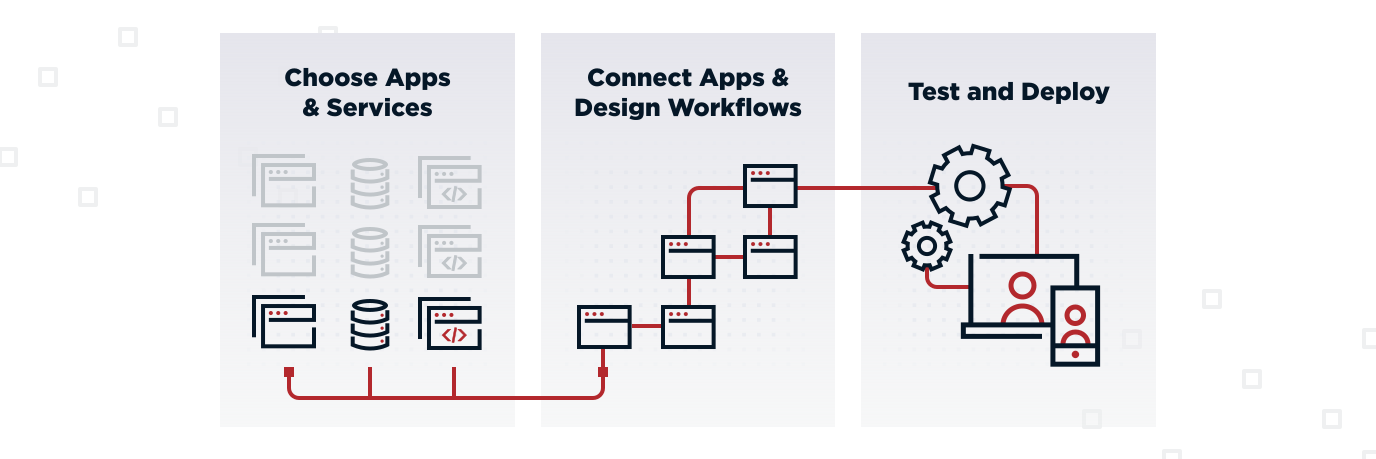
Implementing Zero Trust security is easy to accomplish by using a no-code identity orchestration engine, such as Ping Identity’s DaVinci. With identity orchestration, you can weave in the latest, Zero Trust cybersecurity technologies into highly personalized, omnichannel experiences – without adding unnecessary friction.


Advanced orchestration engines, such as DaVinci, include a drag-and-drop graphical interface that lets you easily configure, measure, and adjust Zero Trust user journeys that utilize digital signals such as device, context, behavior, user choice, analytics, and risk.


With Ping Identity you can also combat increasingly sophisticated threats with capabilities like API security and identity verification so you can feel confident that only the right people are accessing the right resources. Identity verification, passwordless authentication, and multi-factor authentication limit the risk of bad actors using compromised credentials or other personal identifiable information (PII) obtained through phishing attacks or data breaches. 


In addition to Zero Trust, you can use no-code identity orchestration to customize and adjust each step within user journey workflows in order to deliver great digital experiences.

2. Deliver Exceptional Experiences With Purpose-Built Customer IAM Functionality

Healthcare organizations are competing based on experience more than ever. Patients, members, and other types of healthcare customers are no longer willing to tolerate delays, unnecessary friction, and latency. Every millisecond, impression, and experience counts. Customer identity and access management (CIAM) has never been more important in the highly competitive healthcare landscape.


Customer IAM provides the front door your patients, members, and customers walk through to interact with your business. It is foundational technology upon which healthcare experiences are built and delivered.


Attract More Patients, Members, and Customers

Complicated digital experiences drive healthcare customers such as patients and members away. Ping’s DaVinci no-code orchestration engine enables you to build seamless customer journeys that remove unnecessary friction. This includes the registration, authentication, self-service, and checkout processes across all mobile, web, and offline channels. For example, to easily and quickly convert “unknown” visitors into “known” customers at account registration, healthcare organizations can drag and drop social login options into a customer journey workflow with connectors to providers such as Google and Facebook. 


A graphic showing how identity orchestration works


Improve Healthcare Consumer Retention Rates

Retaining your patients, members, and customers is important for your bottom-line. Modern IAM allows you to hyper-personalize care and content by integrating disparate systems and identity data stores deployed across your hybrid IT environments. This allows you to build a real-time view of your patient, member, or customer needs and engagement habits. With this single view of the consumer, you can build and deliver personalized experiences, such as care communications or product promotions, that increase engagement and retention.


Always On Service Availability

With the ability to scale service availability, modern customer IAM platforms also ensure that your patients and members always have access to your services and their healthcare data – even during peak-demand periods, such as payer enrollment periods. This always-on experience gives your visitors and returning customers confidence that they’ll have instant access to what they need, when they need it.

3. Improve Experience and Security Across The Workforce Lifecycle

Digital experiences and security are important for healthcare workforce retention, productivity, and risk mitigation. Ping Identity’s comprehensive IAM platform includes identity management (IDM) and identity governance and administration (IGA) solutions. For healthcare organizations that want to improve experiences and security across the entire workforce lifecycle, modern IDM and IGA capabilities are key.


Capabilities That Ping Identity Governance Offers


The following are some ways Ping’s IDM and IGA solutions can improve your healthcare organization’s workforce lifecycle management, experiences, and cybersecurity.


Deliver Fast Application Onboarding and De-Provisioning

With Ping Identity’s identity governance and administration (IGA) functionality, healthcare organizations can use modern IAM to quickly onboard new business applications from a catalog of preconfigured application templates, in addition to automating user/application assignments with role-based provisioning.


Healthcare organizations can automate and manage the joiner, mover, and leaver lifecycle stages for all users. This is done easily with the ability to automate your organization’s identity lifecycle processes. Ping Identity’s no-code orchestration engine includes pre-configured workflow templates so you can eliminate manual, error-prone processes and custom coding with a drag-and-drop configuration interface to accelerate users’ access to business resources.


Provide Easy, Secure Access To All Work Apps and Resources

Ping Identity’s IAM platform secures access to business applications and resources, both modern and legacy, while delivering a seamless experience. With self-service registration, single sign-on (SSO), federation, multi-factor authentication (MFA), and passwordless authentication capabilities, Ping’s IAM platform delivers security and convenience no matter where a user is within their employment lifecycle.


Healthcare workers typically need access to multiple work apps and resources throughout the day to do their jobs. Single sign-on (SSO) allows healthcare providers, employees, contractors, and partners seamless access to all of their apps and resources with one single login. By eliminating multiple logins and passwords, you improve productivity and security.


Automate Role-Based Access Control with AI and ML

According to the 2023 Verizon Breach Report, the second highest cause of healthcare breaches is internal actors. This is mainly due to human error, such as healthcare data misuse or loss. Most often, healthcare providers, employees, and contractors have more access rights to apps and resources than they need, exposing them to sensitive information they are not supposed to have. Manual, legacy role-based access control (RBAC) processes are not built to manage identities and roles at the scale of today's dynamic and distributed healthcare environments.


Ping Identity’s IAM platform offers an automated approach to identity governance and role-based access control throughout the employment lifecycle. Our identity governance and administration (IGA) solution uses AI and ML automation to give you complete visibility of access rights across your entire organization. This way you can dynamically determine what role-based access and entitlements to approve or revoke.


This identity governance solution eliminates the risks associated with over-provisioned access, orphaned accounts, and entitlement creep. It also provides an ideal foundation to integrate Zero Trust.

Want More Information on the Importance of Identity and Access Management Solutions for the Healthcare Sector?

Ping Identity delivers IAM solutions for healthcare organizations at all stages of their digital transformation. Please download our white paper Improve and Secure Healthcare Delivery with Digital Identity for more information.

Share this Article:
Related Resources

Start Today

See how Ping can help you deliver secure employee, partner, and customer experiences in a rapidly evolving digital world.