
Just-in-time Privileged Access
Control Privilege Beyond Login
Eliminate static credentials. Enforce Zero Standing Privilege. Secure privileged sessions at runtime with hardware-bound assurance.
Just-in-time Privileged Access
Control Privilege Beyond Login
Eliminate static credentials. Enforce Zero Standing Privilege. Secure privileged sessions at runtime with hardware-bound assurance.
We work with the world’s top brands


The Challenge
Forget the Vault. Secure the Session.
Vault-Centric PAM Leaves a Runtime Gap
Traditional privileged access management assumes trust once credentials are issued. But attackers don’t break vaults, they log in. Static entitlements and standing privileges allow lateral movement long after authentication.
The “95/5” Problem
Nearly all human privileged access use cases don’t require static credentials, yet most PAM architectures are built around vaulting and rotating secrets. This creates credential sprawl and unnecessary attack surface.
Trust Breaks Down After Login
Privileged access depends on trust. Not just that the right user is authenticated, but that the session and endpoint remain secure. When trust is granted at login and never revalidated, attackers can exploit that gap long after authentication succeeds.
The Challenge
Forget the Vault. Secure the Session.
Vault-Centric PAM Leaves a Runtime Gap
Traditional privileged access management assumes trust once credentials are issued. But attackers don’t break vaults, they log in. Static entitlements and standing privileges allow lateral movement long after authentication.
The “95/5” Problem
Nearly all human privileged access use cases don’t require static credentials, yet most PAM architectures are built around vaulting and rotating secrets. This creates credential sprawl and unnecessary attack surface.
Trust Breaks Down After Login
Privileged access depends on trust. Not just that the right user is authenticated, but that the session and endpoint remain secure. When trust is granted at login and never revalidated, attackers can exploit that gap long after authentication succeeds.
The Solution
Secure Every Privileged Session in Real Time
Say goodbye to standing privilege and vault-centric access models. With runtime privileged access, users get exactly what they need, when they need it, without static credentials or long-lived admin roles.
Built for modern, hybrid and multi-cloud environments, this identity-native approach eliminates passwords for the vast majority of human access and enforces Zero Standing Privilege (ZSP) as an operating model.
Privileged sessions are time-bound, continuously verified, and cryptographically tied to trusted devices. Secure, auditable, compliant, and productivity-friendly. Less exposure. Less credential sprawl. More control.
Why You’ll Love Our Privileged Access
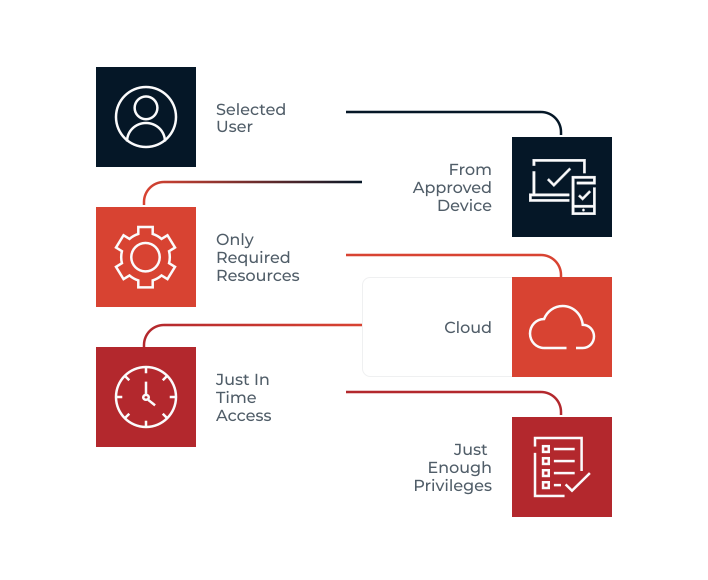
Runtime control that eliminates standing privilege and binds trust to identity and device.
Eliminate Static Credentials
Remove passwords and long-lived SSH keys from the human access path and replace them with ephemeral, runtime-issued access.
Enforce Zero Standing Privilege
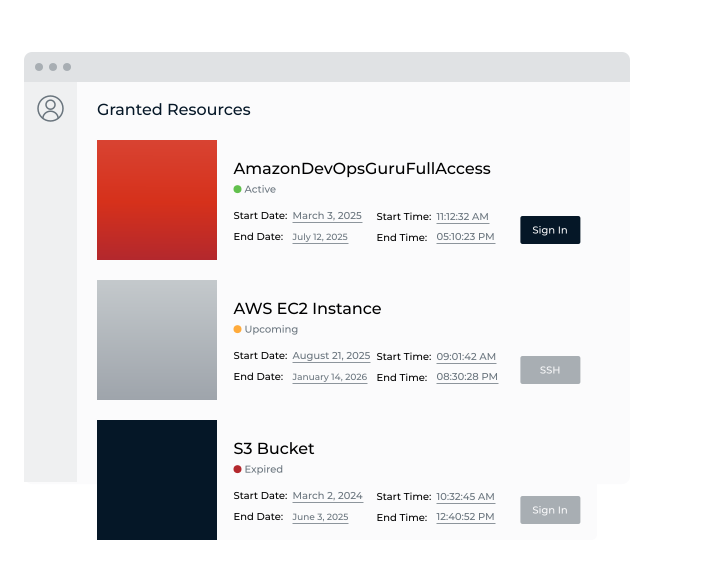
Grant time-bound, task-scoped privilege that disappears when work is complete, no persistent admin accounts.
Hardware-Bound Assurance
Cryptographically bind privileged sessions to verified users and trusted hardware using Trusted Platform Module (TPM) technology.
Unified Identity Control
Extend privileged access into a unified, identity-native control plane integrated with governance and risk signals.
What Makes Our Runtime Privileged Access Work
Short-lived access. Hardware-bound trust. Continuous enforcement.
What Makes Our Runtime Privileged Access Work
Short-lived access. Hardware-bound trust. Continuous enforcement.
Issue privileged access at runtime, scoped to intent, and automatically revoked at session end, eliminating residual elevation.
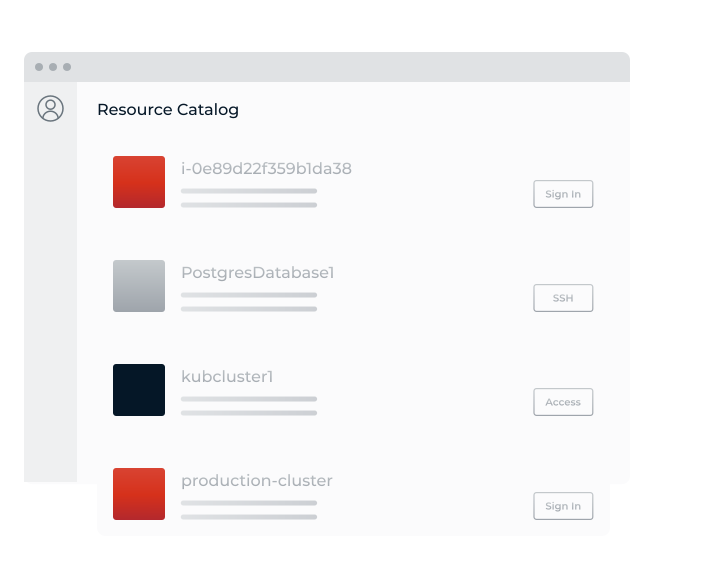
Remove static credentials for the majority of human privileged access use cases while integrating vaults only for narrow break-glass scenarios.
Replace persistent administrator roles with time-bound, policy-driven access aligned to Zero Trust principles.
Protect private keys within tamper-resistant TPM hardware, and require both verified identity and trusted device for privileged access.
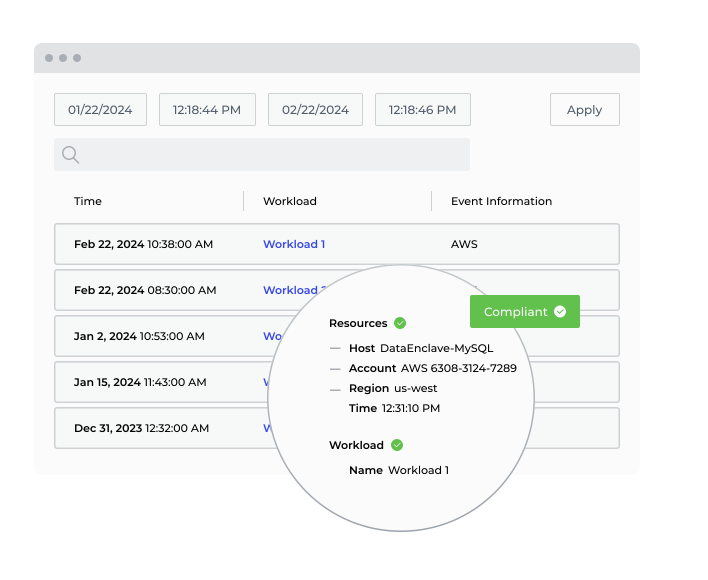
Continuously evaluate identity, device posture, behavior, and contextual signals to adapt runtime authorization decisions.

Dive Into the Details
From runtime enforcement to hardware-bound assurance, explore the services that power modern privileged access control.
Works with
What You Have
PingOne Privilege integrates with existing identity providers, cloud platforms, infrastructure services, and SIEM tools—no rip-and-replace required. Extend runtime privileged access across AWS, Azure, GCP, Kubernetes, databases, and on-prem servers, without re-architecting your environment.
Works with
What You Have
PingOne Privilege integrates with existing identity providers, cloud platforms, infrastructure services, and SIEM tools—no rip-and-replace required. Extend runtime privileged access across AWS, Azure, GCP, Kubernetes, databases, and on-prem servers, without re-architecting your environment.

“In 2017 we bought the whole Ping stack. We were able to secure their accounts, offer better capabilities long-term and higher performance than what we had before.”
Millions
saved by reducing fraud, which has gone back into the business
$570K
saved annually in recovered productivity time
Why Ping Identity?
Privileged access shouldn’t be a siloed vault bolted onto your stack. Ping Identity delivers privileged access as part of a unified identity platform, integrating verification, governance, risk evaluation, and orchestration across every stage of the identity lifecycle.
Here’s what sets us apart:
- Credential-less runtime enforcement
- Hardware-bound privileged access with TPM assurance
- Unified identity-native control plane
- Proven enterprise scale and global trust
Control Privileged Access Beyond Login
Are you ready to eliminate static credentials and enforce Zero Standing Privilege at runtime? Secure privileged sessions with hardware-bound assurance and unified identity control.
Helpful Resources
Helpful Resources
Frequently Asked Questions
Runtime privileged access management enforces task-scoped, time-bound privileged access during an active session rather than assuming trust at login. It continuously evaluates identity, device, and contextual risk to control what actions a user can perform in real time.
Zero Standing Privilege eliminates persistent administrator accounts by granting elevated access only when needed and automatically revoking it when work is complete. This reduces blast radius and prevents lateral movement if an identity is compromised.
PingOne Privilege applies a 95/5 model, removing passwords and long-lived SSH keys from the human access path for most use cases. Instead, it issues ephemeral, policy-driven access at runtime, integrating vaults only for narrow break-glass scenarios.
TPM-backed assurance cryptographically binds privileged sessions to both a verified identity and a trusted physical device. Because private keys are protected in tamper-resistant hardware, attackers cannot replay stolen credentials from unauthorized endpoints.
Traditional PAM focuses on vaulting and rotating static credentials, assuming trust once access is granted. PingOne Privilege enforces credential-less, runtime privileged access with Zero Standing Privilege and hardware-bound device assurance as part of a unified identity-native control plane.