Executive Summary: Identity Is Key to Omnichannel Success
Customers today expect seamless, secure, and personalized interactions, whether they’re browsing in an app, visiting a store, or clicking through an email. Yet many enterprise identity systems were never designed for this level of continuity. Instead, they remain siloed and reactive, requiring customers to re-authenticate or repeatedly reintroduce themselves across touchpoints. These interruptions increase the likelihood of cart abandonment, lost sales, security vulnerabilities, and broken trust.
Additionally, critical systems like CRMs (Customer Relationship Management), CDPs (Customer Data Platforms), and MAPs (Marketing Automation Platforms) often operate independently, relying on unverified or outdated data. As a result, businesses struggle to launch targeted campaigns, maintain compliance, and deliver experiences that build loyalty.
In this white paper, we’ll explore the business consequences of fragmented identity architectures and outline a strategy to help you close the omnichannel gap. We’ll dive deep into how modern customer identity and access management (CIAM) capabilities enable enterprises to streamline access, mitigate fraud, comply with regulatory requirements, and deliver a consistent customer experience (CX).
This guidance is designed for cross-functional stakeholders, addressing concerns faced by line-of-business leaders focused on growth and ROI, digital experience owners charged with ensuring seamless journeys, and fraud and security professionals responsible for safeguarding systems without impacting agility.
A modern CIAM strategy is no longer optional. It is a competitive necessity that bridges digital and physical, balances convenience with security, and aligns business priorities with consumer expectations.
Part I: The Cost of Getting it Wrong
Friction: Where the Customer Journey Breaks
Across industries, enterprises are investing heavily in digital transformation. Yet even the most sophisticated digital interfaces can’t compensate for broken identity experiences. Friction during critical moments, such as account opening, authentication, login, transaction, or recovery, can shatter an otherwise elegant customer journey. These breakdowns occur more often than many organizations realize and often go unreported. Instead of providing feedback, customers will simply walk away.
For example, a customer might browse products on their tablet and add items to a shopping cart, only to find the cart empty when they log in later via their smartphone.
In other cases, first-time customers are asked to complete long registration forms or forced to create an account before purchasing. These experiences disrupt engagement, increase bounce rates, and negatively impact customer lifetime value (CLV). Another common issue is the failure to link loyalty programs and personalization systems. Even the most advanced CRM or MAP can’t compensate for an incomplete or fragmented identity view. A shopper may purchase an item in-store and later engage with the brand’s mobile app, expecting to see loyalty points reflected in their profile—only to find no record of the transaction. This is a result of disconnected systems that fail to tie identity together across physical and digital environments. The problem escalates further when customers experience trouble recovering passwords or verifying accounts. Many are trapped in verification loops with delayed emails, forgotten security questions, or non-functional links. The cumulative frustration from these encounters not only halts individual transactions but damages long-term brand perception.
Hybrid is the Future. Identity Isn’t Ready.
Customer expectations have evolved well beyond digital-first. Today’s consumers expect fluid transitions between online and offline experiences. They browse on mobile, purchase in-store, and initiate returns through kiosks. They participate in livestream shopping, scan QR codes for promotions, and use curbside pickup—all as part of a single brand interaction. This hybrid model, often referred to as “phygital,” demands real-time identity continuity across channels. Unfortunately, most enterprises rely on fragmented IAM infrastructure that wasn’t designed for this level of agility.
A typical hybrid failure scenario involves a customer who places an order through a mobile app for in-store pickup. At the store, the customer is asked to provide identification because the in-store system doesn’t recognize the mobile account. This friction reduces satisfaction and discourages future engagement.
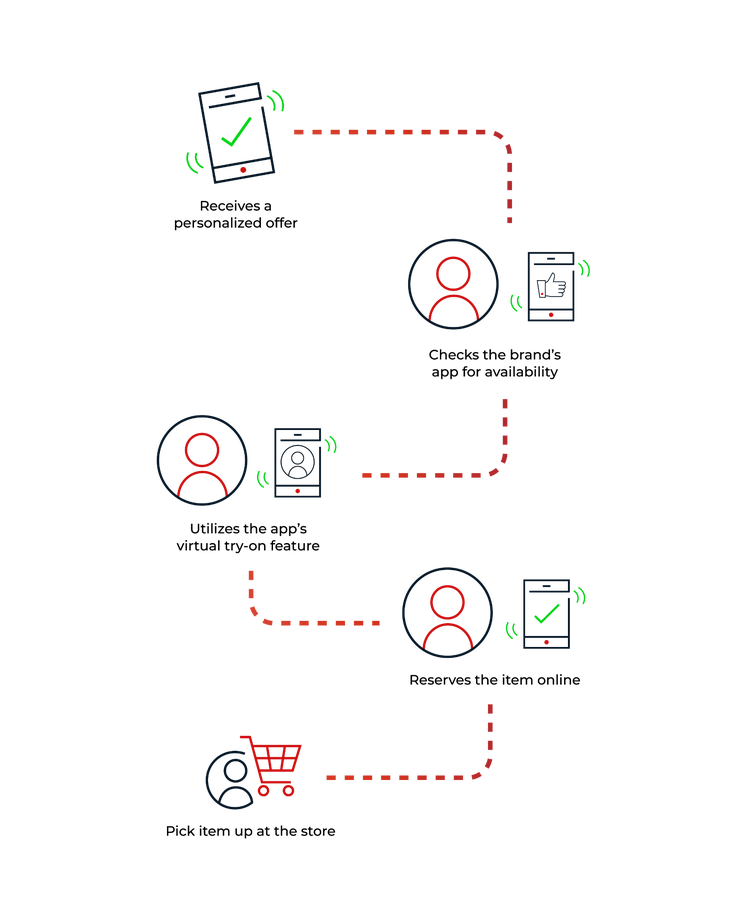
Another example is a shopper who tries a product virtually using an AR tool in the app, adds it to their wishlist, and then visits the store expecting a personalized experience. Without unified identity, the in-store associate has no access to the customer’s digital interactions, and the experience feels disjointed.
Hybrid use cases also introduce new security concerns. Without a connected risk model, login behaviors from mobile apps and in-store kiosks are evaluated in isolation. This not only impairs fraud detection but increases false positives that affect legitimate customers.
As the physical and digital worlds continue to converge, identity is the one layer that must unify them. But without real-time orchestration and shared context, hybrid experiences break down, leaving businesses vulnerable to churn, fraud, and reputational damage.
The Business Impact of Identity Friction
The financial impact of identity friction is substantial. Poor identity experiences lead to measurable losses across multiple dimensions: revenue, loyalty, brand perception, and operational cost.
The Research is Clear:
Revenue losses stem from abandonment at key points in the customer journey. Without a seamless way to authenticate and complete transactions, customers simply don’t convert. Customer loyalty also suffers. When identity systems fail to deliver consistent, personalized experiences, customers feel invisible.
Without verified, centralized identity, CRM and CDP platforms fail to personalize content or trigger timely, relevant campaigns. This lack of personalization translates into weaker brand affinity and lower lifetime value.
On the security side, poor coordination between authentication and fraud detection systems can result in both false positives and real threats slipping through. When legitimate customers are blocked due to overly rigid rules, support teams become overwhelmed, operational costs rise, and customer satisfaction plummets. Conversely, when fraudsters exploit gaps in session intelligence or identity verification, the financial and reputational damage can be severe.
Operational costs also escalate when customer service is forced to handle identity issues manually. Every password reset, loyalty dispute, or duplicate account correction adds time and expense.
Part II: Understanding the Root Causes
Why Disconnected Identity Hurts Everyone
Many of the challenges seen in customer acquisition, engagement, and retention can be traced back to identity fragmentation. In a typical enterprise environment, customer data is spread across multiple systems: web portals, mobile apps, call centers, CRM databases, point-of-sale systems, and partner ecosystems. Each of these systems often manages identity independently, resulting in a disjointed view of the customer. Marketing platforms may rely on anonymous session data or cookies, while CRM systems may hold static, outdated profiles.
This fragmentation undermines the organization’s ability to recognize returning customers, personalize experiences, or respond to risk signals in real time. Customers who interact through different channels are frequently treated as new shoppers each time, forced to re-enter credentials, re-confirm identity, or accept mismatched experiences.
From a digital experience perspective, this lack of continuity leads to a disjointed customer journey. Marketing automation systems may fail to trigger relevant campaigns. Mobile apps might not recognize actions taken on a website. Loyalty programs fail to account for in-store purchases.
From a fraud prevention standpoint, disconnected identity systems make it difficult to detect patterns of malicious behavior across sessions. One system may flag unusual login velocity, while another sees no cause for concern. Without an integrated view of user activity, bad actors can exploit blind spots in the security model.
At the business leadership level, fragmented identity data means customer metrics are unreliable. Metrics like CLV, churn, and conversion rates are skewed when user data is split between systems or duplicated due to weak identity resolution. This leads to poor decision-making, wasted budget, and missed revenue targets.
Customers are Falling Through the Gaps
Look for the following red flags. if any sound familiar, it’s time to modernize your CIAM strategy.
- High Registration/Login Abandonment
- Inconsistent CX & Personalization
- Elevated Support Center Call Volumes
- Fraud Activity & False Positives
- Inaccurate CRM/CPD Data
One of the most obvious red flags is a high rate of registration or login abandonment. If conversion drops sharply at the point where consumers are asked to create an account, log in, or recover credentials, there’s likely too much friction in your identity flow.
On the fraud side, the presence of both false positives and undetected suspicious activity often points to a fragmented risk model. When risk scoring isn’t consistent across channels, attackers find gaps to exploit while legitimate customers suffer unnecessary friction.
Even within back-office analytics, identity issues can be spotted. High rates of duplicate records in CRMs or CDPs, inflated audience sizes, and attribution errors are all signs that identity systems aren’t working in concert. These distortions hurt strategic planning and cloud executive decision-making. Recognizing these patterns is the first step toward fixing them. Modern CIAM addresses these challenges by creating a centralized identity layer that serves as a single source of truth across all systems and teams.
Part III: What Modern CIAM Enables
Unified Identity for the Omnichannel Enterprise
Modern CIAM solutions allow enterprises to move beyond reactive authentication and embrace identity as a continuous, contextual capability that spans the full customer journey. Unified identity means consolidating all of a customer’s interactions, across apps, websites, stores, and support channels, into a single, secure, and dynamically updated profile.
For digital experience teams, this unlocks the ability to personalize content in real time. When a returning user logs in from a new device, their session is seamlessly resumed, their preferences are remembered, and they encounter experiences tailored to their previous behavior. This reduces friction and increases engagement.
When integrated with CRM, CDP, and MAP platforms, CIAM ensures that engagement tools operate from the same source of truth. For marketing and business operations, a unified profile means greater targeting precision. Campaigns are based on verified data, not assumptions. Offers and messages align with behavior, driving higher conversion rates and reducing spend waste.
Unified identity also eliminates data duplication, making audience sizes more accurate and campaign attribution more reliable.
From a fraud and risk management perspective, unified identity improves signal clarity. When behavior and device information are linked to a single profile, anomalies become easier to detect and trust scores become more precise. This leads to better fraud prevention without adding CX friction.
Five CIAM Capabilities that Close the Gaps
To enable secure, seamless, and scalable customer experiences, enterprises should focus on five foundational CIAM capabilities.
1. Frictionless Cross-Channel Access
CIAM should make it possible for someone to authenticate once and move effortlessly between web, mobile, app, and physical environments. Identity federation, session management, and device trust are critical here. When implemented well, customers enjoy continuity without repetitive logins, and businesses gain a complete picture of engagement.
2. Modern Authentication Methods
Passwordless and adaptive login methods dramatically reduce friction. Traditional username-password flows are not only vulnerable to attack—they’re also frustrating to keep track of. Modern CIAM allows businesses to authenticate users with biometrics, magic links, or passkeys, tailoring security based on behavior, device, and risk level. When additional verification is needed, adaptive authentication kicks in with just the right amount of friction—enough to protect, but not enough to drive abandonment.
3. Built-in Fraud Detection
Real-time fraud detection must be baked into the identity layer, not bolted on. Enterprises need to evaluate risk signals—such as impossible travel, device mismatch, or bot-like behavior—at every stage of the session, not just at login. By analyzing behavior continuously and responding dynamically, CIAM can prevent threats before they escalate.
4. Centralized Consent and Preference Management
Consent and preference management is essential for regulatory compliance and customer trust. Consumers should be able to manage how their data is used, what communications they receive, and how they authenticate—all from a centralized, branded dashboard. More importantly, these preferences should be enforced in real time across all integrated systems including CRM, CDP, and MAP platforms. This improves compliance with regulations like GDPR and CCPA while building trust, ensuring that customer expectations and legal obligations are met simultaneously.
5. Business-Led Orchestration
Orchestration tools enable agility. Without needing to write code, business stakeholders should be able to design, test, and deploy new identity flows. This includes changes to onboarding, authentication, re-verification, and profile enrichment. Visual editors and drag-and-drop logic allow for rapid iteration, letting digital teams respond quickly to evolving customer needs and regulatory changes.
Enabling Hybrid Journeys with Identity
Hybrid customer experiences (those that span digital and physical environments) have become a defining feature of modern commerce. As these experiences multiply, identity must serve as the connective tissue that enables continuity, personalization, and security.
In a buy-online, pick-up-in-store (BOPIS) scenario, for example, CIAM enables shoppers to authenticate their order through an app, arrive at the store, and verify pickup with a tap or scan. There’s no need to present a physical ID or repeat a password because identity flows seamlessly from mobile to storefront.
In livestream shopping environments, consumers can join events, ask questions, and purchase products in real time. CIAM makes these experiences secure and personalized by recognizing the shopper, maintaining authentication throughout the session, and ensuring that payment and shipping preferences are preloaded.
A hybrid shopping journey enabled by identity
For virtual try-ons, CIAM allows identity attributes, such as saved sizes, style preferences, and previous purchases, to personalize the experience. When customers switch from the app to a retail associate or kiosk, their data travels with them.
Even parcel locker pickups and order-ahead dining models rely on consistent identity. A customer who places an order on a mobile app should be authenticated at pickup using a QR code or app notification. CIAM ensures that only the right person collects the order and that the system logs the interaction for future personalization.
Hybrid experiences introduce nuance, but they also introduce opportunity. When CIAM utilizes advanced orchestration, it removes the friction and risk that usually accompany cross-channel interaction. The result is a brand experience that feels consistent, secure, and customer-centric, no matter where or how the engagement happens.
Part IV: From Strategy to Execution
Making CIAM a Cross-Functional Business Priority
Customer identity spans departments, platforms, and business units. To be effective, CIAM must be owned collaboratively across digital product management, marketing operations, fraud prevention, IT security, and legal/compliance. It cannot be siloed in engineering or treated as just another infrastructure project.
Organizations that succeed with identity treat CIAM as a strategic capability, aligned with customer lifetime value, conversion, security, and brand trust. When departments collaborate around shared KPIs, such as login success rate, session continuity, customer churn, and fraud reduction, they unlock a multiplier effect.
Digital teams benefit from rapid testing and launch of new flows. Marketing gains real-time personalization and consent governance. Fraud teams reduce false positives by evaluating unified risk signals. Legal teams ensure privacy and compliance across regions.
Cross-functional CIAM planning begins with shared objectives. Leaders must map identity touchpoints across the customer journey and align them to specific business outcomes. Align stakeholders early, and make sure tools integrate with CRM, CDP, MAP, analytics, and fraud platforms to avoid fragmentation. Teams should then co-design journeys—registration, login, profile management, and consent updates—with input from all stakeholders.
It’s also critical to select CIAM tools that offer orchestration and configurability for non-technical users. Business agility is lost when every change requires code or a development backlog. Empowering business owners to adapt identity flows directly allows the organization to respond to threats, regulatory changes, and customer needs in real time.
Identity Maturity Model & Readiness Assessment
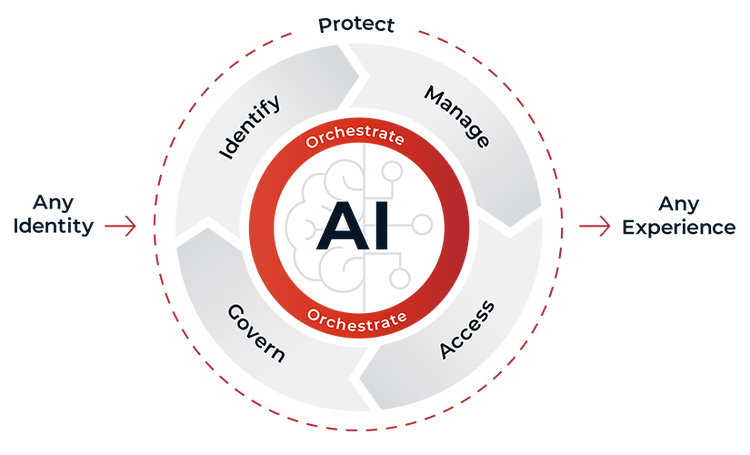
Enterprises progress through stages of identity maturity, moving from basic authentication to fully orchestrated, insight-driven identity experiences. Understanding where your organization sits on this spectrum is essential for prioritizing investment and change management.



Partner Checklist: What to Look for in a CIAM Solution
Organizations should look for providers that offer the following:
- Unified Identity View: The ability to consolidate duplicate identities, merge session data, and manage identities across all digital and physical touchpoints.
- Passwordless and Adaptive Authentication: Options for biometric login, social login, device trust, and real-time risk-based access control.
- Business-Led Orchestration: Visual, no-code tools that allow non-technical users to build and manage flows for registration, verification, and consent updates.
- Real-Time Fraud Prevention: Integration of behavioral analytics, bot detection, device fingerprinting, and threat intelligence to continuously evaluate and act on risk.
- Enterprise-Grade Integration: APIs and pre-built connectors for major CRM, MAP, CDP, eCommerce, analytics, and IAM platforms.
- Scalability and Reliability: Proven ability to support millions of users, deliver high availability, and meet data residency and compliance requirements.
The ideal CIAM solution acts not just as a gatekeeper, but as an intelligent decision engine that supports personalization, protects trust, and accelerates time-to-market for new experiences.
Real-World Success Stories
Leading U.S. Home Improvement Retailer
A leading U.S. home improvement retailer with over 80 million identities under management turned their CX into a growth engine with Ping. Prior to the project, they lost revenue due to missed customer acquisition targets and high cart abandonment.
The Outcome: After reducing online friction with modern CIAM, they have achieved an 83% growth in online accounts in two years with 15 million new accounts, and drove 32% growth in online revenue each year since implementation.6
Global Multi-Brand Fashion Retailer
A global multi-brand fashion retailer used modern CIAM to improve CX, mitigate fraud, and create a safe shopping experience for their customers. Before implementation, an outdated CX caused lost revenue through high cart abandonment rates, while account takeovers driven by malicious bots caused chaos and customer churn.
The Outcome: After partnering with Ping, the retailer realized $70 million annual revenue growth due to reduced cart abandonment, a $3 million annual reduction in gift card fraud, and an 84% reduction in malicious bots hitting the authorization stage.6
American Restaurant Chain
An American restaurant chain with over 800 locations and over $3 billion in annual revenue, partnered with Ping to improve the omnichannel experience for their customers by upgrading their online ordering system and loyalty program. The company was also dealing with fraud and IAM inefficiencies that were impacting their bottom line.
The Outcome: 1,700% growth in online accounts in 4 years and 9.2 million identities managed and secured.⁶
Identity Is the Front Door, Not Back Office
Customer identity is now central to business success.
What used to be treated as a background IT function has emerged as a critical layer in the customer experience stack; a dynamic interface that can either enhance or undermine every digital and in-person interaction. In today’s omnichannel and hybrid-first world, identity is how your customers experience your brand.
Enterprises that fail to invest in modern CIAM strategies risk far more than login issues. They risk lost conversions, damaged trust, and higher fraud. Disconnected systems lead to inconsistent journeys. Rigid authentication workflows push people away. Insufficient consent controls expose the business to compliance risk.
But with the right identity foundation in place, all of this changes.
Organizations that prioritize customer identity as a strategic capability unlock faster time-to-market, lower operational cost, higher engagement, and improved retention. Unified CIAM platforms orchestrate seamless authentication, intelligent access control, fraud mitigation, and preference management—across devices, apps, partners, and physical spaces.
As customers demand more fluidity across digital and physical touchpoints, identity must become the connective tissue that ties it all together. The brands that win are those that treat customer identity not as a backend utility, but as a business enabler and competitive differentiator. Identity is no longer just about who a customer is. It’s about how your business shows up for them, in every moment that matters.
Sources
1 Ping Identity, “2024 Consumer Survey - The Great Technology Wave”
2 McKinsey & Company, “Unlocking the next frontier of personalized marketing”
3 CropInk, “Cart Abandonment Statistics [2025 Update] – Why Shoppers Leave”
4 Baymard Institute, “Cart Abandonment Rate Statistics”
5 PwC, “Experience is everything: Here’s how to get it right”
6 Internal Ping Identity data gathered from customers
Ping makes it possible to trust every digital moment. Our enterprise-grade identity platform secures customers, employees, partners, and non-human identities at scale across cloud, hybrid, and on-prem. From passwordless to AI-ready, we help you fight fraud, simplify access, and accelerate growth. With us, trust is built in. Learn more at www.pingidentity.com.