Introduction
This guide will help you learn about the many ways in which the Ping Identity Platform can transform your customer experience (CX), secure mission-critical infrastructure and data, and ultimately, accelerate your competitive standing and market share. Let’s explore the essential customer identity and access management (CIAM) capabilities needed to secure your ecosystem while helping you continuously enhance your customer journeys.
Our goal is to provide you the knowledge and tools needed to:
- Mitigate risk of new account fraud (NAF)
- Streamline client onboarding
- Strengthen “Know Your Customer” (KYC) checks
- Deliver hyper-personalized experiences
- Secure payments
- Accelerate your digital agility
Connect your business challenges with solutions and value while gaining insight into reference architectures and realizing a full return on your IAM investment.
Section 01 – CIAM Capabilities
This section will help you gain insight into how the Ping Identity Platform can elevate your CX across the industry and explore new ways to scale by leveraging identity solutions that set your business apart.
Use Figure 1 as a foundation for your identity strategy. You’ll be able to align common business objectives with various stages of the client journey, pinpoint essential capabilities for success, and align these priorities across your teams.
This will allow you to gain a deeper understanding of the Ping Identity Platform’s comprehensive capabilities that will shape your digital identity strategy.
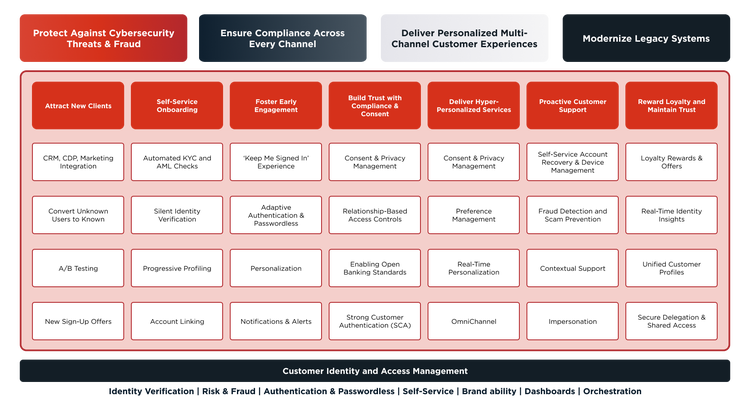
Figure 1. Key CIAM capabilities for financial service providers
The customer identity journey can be broken down into key stages:
- Attract New Customers: Accelerate acquisition by integrating access journeys with your marketing, customer relationship management (CRM), and customer data platform (CDP) systems. Sync new customer profiles across systems, enabling deep personalization across end-to-end sign-up journeys. Convert anonymous users into known customers.
- Self-Service Onboarding: Integrate your CIAM platform with tools that deliver automated KYC and Anti-Money Laundering (AML) checks, leveraging strong identity verification for new account openings. Drive a consistent registration process across different devices, and progressively profile new clients to unlock new, differentiated services.
- Foster Early Engagement: Leverage single-sign on (SSO) to deliver a smooth authentication experience across different services. Reduce multi-factor authentication (MFA) fatigue with an adaptive, risk-based approach. Use CIAM data to analyze customer behavior, enabling predictive offers at the right moment. Implement real-time security alerts, notifying customers of suspicious activity while allowing them to take remedial action quickly.
- Build Trust with Compliance and Consent: Protect customers’ personally identifiable information (PII) to solidify trust. Drive regulatory compliance with privacy regulations like GDPR, CCPA, and the Australian Privacy Act. Build, test, deploy and enforce fine-grained access controls. Provide customers access to their account history via audit trails, and apply MFA step-up authentication for high-risk transactions.
- Deliver Hyper-Personalized Services: Leverage CIAM data to segment customers based on behavior and preferences, like device preference or login time, to deliver personalized product recommendations. Allow customers to manage their preferences, ensuring tailored experiences use real-time data to adjust offerings and messages based on a customer’s current interaction, and deliver consistent, personalized services across all devices and platforms.
- Proactive Customer Support: Enable secure, self-service account recovery and real-time fraud detection and alerts to proactively identify issues and provide your customers with immediate remediation. Empower customer support teams to access detailed profiles and activity logs, along with impersonation capabilities. Leverage integrations with artificial intelligence (AI) chatbots to handle basic account recovery tasks while ensuring sensitive information remains secure.
- Reward Loyalty and Maintain Trust: Utilize integrations with loyalty platforms to drive seamless access to rewards based on identity user profiles, leverage CIAM insights to identify customers at risk of churn and deploy targeted rewards or offers to retain them, maintain unified customer profiles across channels, helping track and respond to customer needs, preferences and loyalty behaviors over time, and ensure seamless access to services with minimal downtime while handling growing volumes of users.
- Protect Against Cybersecurity Threats and Fraud: Leverage threat detection and identity verification solutions that can help protect against adversarial-AI, account takeover (ATO), and NAF attacks.
- Ensure Compliance Across Every Channel: Reduce overhead and costs associated with achieving regulatory compliance and alignment with GDPR, CCPA, AML, and KYC requirements.
- Deliver Personalized Multi-Channel Customer Experiences: Enhance personalization across mobile, web, and hybrid channels to enhance CX by enabling unified view of identity and real-time behavioral insights.
- Modernize Legacy Systems: Reduce reliance on home-grown identity infrastructure and a fragmented IAM estate by converging all your identity needs into a unified platform to reduce technical debt, accelerate agility, and increase return on digital spend.
CIAM is crucial at every stage of the customer journey, providing a flexible and secure framework that evolves with the changing needs of the financial services industry. This overview offers a foundational guide to how CIAM can help your business achieve its goals quickly and effectively.
Section 02 – Reference Architectures
Modern capabilities enable every touchpoint between the customer and their financial service providers. This cuts across banking, insurance, wealth management, and payments to the extent that CIAM has now become a strategic asset. Getting foundational identity capabilities, like identity verification, authentication, consent management, fraud detection, and fine-grained authorization is now mission-critical.
By mapping customer identity capabilities to these business value streams, financial providers can deliver secure, seamless, and compliant experiences across every customer touchpoint, regardless of channel. Figure 2 provides a visual guide for aligning CIAM capabilities with business use cases, enabling alignment between technical and line-of-business stakeholders during the modernization process.
To unlock the end-to-end value of CIAM, financial service providers will need to leverage a wide array of capabilities across multiple stages of the customer journey and multiple use cases. Figure 2 provides a reference architecture that serves as a strategic communication tool, enabling you to clearly convey the identity vision to line-of-business and technical leaders and create alignment across your organization.
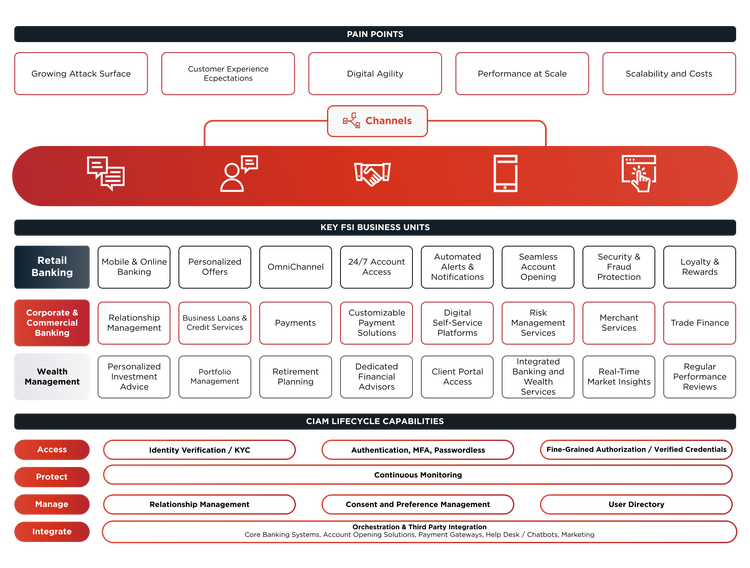
Figure 2. CIAM capabilities mapped to financial service business use cases (co-developed with Deloitte)
A robust CIAM platform must cater to the needs of diverse customer-facing channels, such as online banking, mobile applications, and social media, as well as the core requirements of key business units. The reference architecture shown in Figure 1 illustrates these foundational elements, spotlighting the essential capabilities needed in a modern identity solution. While it focuses on the most critical tools, it’s important to note the list may not encompass every possible stakeholder within your organization.
CIAM Lifecycle Capabilities
These foundational capabilities serve as the building blocks for achieving your identity goals. Each layer of the Ping Identity Platform is designed to build upon the previous one, creating a cohesive and scalable solution. Financial service providers commonly depend on these core functions to address their customer identity requirements. Beyond these, a comprehensive, end-to-end CIAM platform must also take into account the following considerations at each stage of the life cycle:
CIAM Lifecycle Stage: Manage
- Relationship Management: The power of CIAM goes beyond just securing access; it’s about understanding and managing the complex relationships across a myriad of stakeholders distributed across complex organizational and geographical boundaries. Robust CIAM must effectively recognize and maintain these relationships to ensure the right access controls are in place. This extends to delegating access to third-parties and securing PII in the rapidly changing M&A landscape across the industry.
- Consent and Preference Management: Empowering customers to control their PII is fundamental to building privacy-enabled relationships rooted in trust and transparency. Effective consent and preference management ensures compliance with data protection regulations, such as GDPR and CCPA, while reinforcing your commitment to respecting individual rights. Customers must be able to easily grant, review, and revoke consent for third-party data sharing, with full visibility into consent histories.
- Directory: A modern directory is the backbone of a unified CIAM strategy. It enables secure, scalable, and real-time access to rich, consolidated customer profiles by seamlessly integrating identity data from both first-party and third-party systems. This unification breaks down silos across digital channels; web, mobile, contact center, in-branch, and eliminates visibility gaps that can lead to inconsistent access decisions, compliance risks, and fraudulent activity. Most critically, it provides a dynamic, 360-degree view of each identity across the entire engagement ecosystem, ensuring every interaction is informed, secure, and privacy-respecting.
CIAM Lifecycle Stage: Access
- SSO: Simplifies and secures CX by enabling access to multiple applications and services with a single login. This reduces password fatigue, improves engagement, and provides a frictionless journey across digital channels. By centralizing authentication, SSO minimizes security risks associated with weak or reused credentials and supports stronger MFA and strong customer authentication (SCA). It also enhances visibility and control over user activity, helping organizations meet compliance requirements while offering a consistent, privacy-respecting experience that builds trust and loyalty.
- Dynamic MFA and Passwordless: Modern authentication must go beyond static methods to balance security, convenience, and fraud prevention. Dynamic MFA and passwordless strategies empower organizations to deliver smooth, trust-based experiences by leveraging real-time risk signals, both first-party (such as device behavior or geolocation) and third-party (such as fraud intelligence feeds or identity verification services). These signals inform intelligent, context-aware decisions, allowing authentication journeys to be dynamically adapted to the risk level. Through identity orchestration, businesses can design flexible authentication flows that offer customers choices, such as biometrics, push notifications, or secure passkeys, while escalating security requirements only when needed.
- Fine-Grained Authorization: Modern CIAM goes beyond static, role-based access to deliver fine-grained, context-aware authorization that dynamically enforces the principle of least privilege. By externalizing authorization from legacy applications and core systems, organizations can centralize access control and apply consistent, policy-based governance across their digital ecosystem. Fine-grained authorization policies can be continuously evaluated and adapted as conditions change, ensuring sensitive financial data is protected without compromising CX. Ultimately, externalized, policy-driven authorization is essential for securing complex financial environments while enabling experiences at scale.
- Verified Credentials: Innovation-driven CIAM empowers financial service providers to adopt decentralized identity (DCI), enabling wallet-based, user-controlled experiences that prioritize privacy, security, and customer autonomy. By allowing customers to store and present cryptographically secure credentials, such as proof of identity, account ownership, or verified attributes, directly from their own devices, verified credentials empower individuals with greater control over their personal data. This approach significantly reduces reliance on centralized identity stores, minimizing the risk of large-scale, server-side breaches and data leaks and supporting true customer-centric data portability.
CIAM Lifecycle Stage: Protect
- Threat Protection: Safeguard against modern cyber threats, such as bots, ATO, and NAF, by leveraging a blend of first-party behavioral signals and OOTB third-party risk intelligence. Integrated through access journey orchestration, these signals enable real-time detection of anomalous access patterns and automated responses like step-up authentication or access denial. This adaptive, signal-driven approach protects sensitive data and institutional assets while preserving seamless and secure interactions.
- Identity Verification: Establishing and maintaining verified trust is essential, not only at the point of onboarding, but throughout the entire customer lifecycle. Identity verification must be continuous and adaptive, extending beyond initial KYC checks to re-verify when risk thresholds rise, such as during high-value transactions, account recovery, and access from unrecognized devices or locations. By integrating real-time verification methods, including biometric authentication, government-issued document scanning, liveness detection, and trusted third-party identity providers, financial service providers can confirm identity with high assurance at critical moments.
- ATO Prevention: Preventing account takeovers requires a layered, intelligence-driven approach that analyzes a wide range of real-time risk signals to detect suspicious activity. These include bot detection, IP velocity and reputation, geo-velocity anomalies, access from anonymous networks, device inconsistencies, and deviations from normal behavior. By continuously evaluating these indicators and integrating them into access journey orchestration, organizations can dynamically trigger responses such as step-up authentication, identity re-verification, or access denial.
CIAM Lifecycle Stage: Integrate
- Open Banking Integration: In the open banking ecosystem, a secure and seamless digital experience hinges on tight integration between the core banking system and the customer identity provider. Without this connection, identity-related actions, such as login, consent, and account recovery, may not accurately reflect the customer’s real-time account status, limiting both security and CX. By integrating identity with core banking systems, institutions can dynamically leverage up-to-date account data to drive adaptive authentication, contextual access decisions, and personalized onboarding flows. This ensures that consent management, transaction validation, and risk assessments are aligned with the customer’s current financial behavior and entitlements.
- Chatbots: Modern chatbots are intelligent digital assistants that help customers quickly access information, resolve issues like account lockouts, and complete tasks without waiting for live support. To be truly effective, chatbots must understand customer intent, context, and preferred communication channels to guide conversations toward resolution efficiently. By integrating with a CIAM platform, chatbots gain the ability to perform secure authentication and identity verification within the support flow, enabling personalized, context-aware interactions that adapt to the customer’s history and risk profile.
- AI Agents: As consumer-facing AI agents become more prominent across financial services, CIAM platforms play a critical role in authorizing and governing their access. These agents, whether acting on behalf of customers to retrieve account information, initiate transactions, or interact with third-party services, must be granted precisely scoped, policy-driven access to sensitive data and functions. CIAM enables this by authenticating the agent’s identity, evaluating contextual risk signals, and enforcing fine-grained, real-time authorization policies to ensure AI agents only access the right information at the right time for the right task. CIAM empowers customers to maintain oversight and control through consent management, audit trails, and dynamic permission settings, ensuring transparency, trust, and compliance as AI agents become an integral part of CX.
- Marketing, CRM, CDP: Integrating your CIAM platform with marketing automation tools, CRM and CDP systems, is key to unlocking the full potential of customer intelligence. This integration allows organizations to synchronize verified identity data, behavioral insights, and preference information across systems, creating a unified, real-time view of each customer. With this foundation, marketing and CX teams can move beyond generic campaigns to deliver hyper-personalized, contextually relevant offerings tailored to individual needs, preferences, and life stages.
- Fraud Prevention: CIAM plays a critical role in modern fraud prevention by enabling real-time, identity-centric security across every digital moment. By integrating risk signals, such as device fingerprinting, behavioral analytics, geo-velocity, and known fraud intelligence, CIAM platforms can detect suspicious activity early and trigger dynamic responses like step-up authentication, session termination, or access denial. This proactive approach helps prevent common attack vectors such as ATO, credential stuffing, and synthetic identity fraud. With built-in orchestration capabilities, CIAM ensures security measures are contextually applied, minimizing friction while maintaining high assurance.
- Payment Gateways: In open banking and Payment Initiation Service Provider (PISP) scenarios, CIAM platforms enhance security and CX by working in concert with traditional API gateways to manage identity-driven access to payment services. While generic API gateways handle traffic and basic routing, CIAM gateways enforce fine-grained, context-aware authorization, ensuring only authenticated and consented users can initiate transactions. By integrating directly with payment processors and financial APIs, CIAM enables dynamic verification and consent management based on real-time signals such as transaction amount, device type, location, and behavioral risk. This supports SCA requirements under regulations like PSD2 and allows customers to make secure, seamless payments through third-party apps without exposing sensitive credentials.
- Customer Support: Integrating customer support platforms with your CIAM solution transforms support interactions into secure, seamless experiences rooted in verified trust. Through capabilities such as back-channel initiated authentication (CIBA), support agents can trigger real-time identity verification requests to a customer’s registered device, allowing customers to securely approve or deny access without disclosing credentials over the phone or chat. This approach not only accelerates issue resolution, but also provides strong protection against authorized push payment (APP) fraud, where attackers impersonate support staff to gain account access.
The Ping Identity Platform addresses the evolving challenges of digital engagement through a comprehensive CIAM-led approach that unifies security, personalization, and trust across every customer touchpoint. By enabling fine-grained authorization, dynamic MFA, verified credentials, and contextual threat protection, Ping Identity ensures the right users have the right access at the right time, whether during onboarding, transaction initiation, or chatbot interactions. Its orchestration capabilities integrate seamlessly with marketing systems, core banking platforms, and third-party services to power hyper-personalized, compliant experiences.
With support for decentralized identity, secure payment flows, CIBA-enabled support authentication and real-time fraud prevention, the Ping Identity Platform not only enhances convenience and autonomy, but also strengthens defenses against modern threats while meeting regulatory demands. This holistic identity foundation empowers financial institutions to deliver trusted, secure, and seamless services across the full customer lifecycle.
Section 03 – Identity Experiences
Identity experiences can help bridge the gap between your organization’s strategic objectives and the identity solutions required to meet them. We’ve outlined the most common identity experiences in financial services that provide a clear path to achieving your goals.
First, let’s look at a real-world example of how an account opening experience can go from disjointed to seamless.
A Tale of Two Account Openings
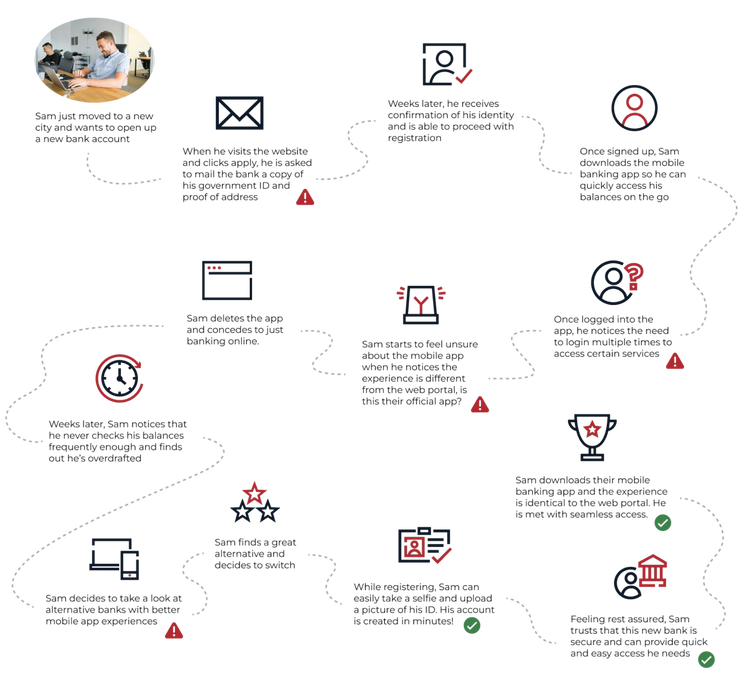
1. Onboarding: From Paper-Based Friction to Instant Digital Trust
Sam’s first touchpoint with the bank is already outdated, requiring him to mail physical documents for identity verification. This creates unnecessary delay, operational overhead, and frustration, undermining trust before the relationship even begins. CIAM eliminates this barrier by enabling real-time digital identity verification using biometric checks and document uploads, streamlining account creation and ensuring compliance without introducing friction. When onboarding is digital-first, secure, and fast, it sets the stage for a confident and seamless customer relationship from day one.
2. Access and Experience: Disjointed Channels Undermine Confidence
Once onboarded, Sam encounters fragmented login experiences across channels, having to login multiple times and noticing discrepancies between the mobile app and web portal. This inconsistency raises red flags about security and legitimacy, especially in financial services. CIAM addresses this by providing consistent, brand-aligned access via SSO and centralized identity management, so customers move fluidly between devices and channels with confidence. Seamless and familiar experiences reduce friction, reinforce trust, and prevent abandonment caused by confusion or login fatigue.
3. Engagement and Retention: Poor Identity Flows Lead to Long-Term Loss
Since access is cumbersome, Sam uses the app less frequently, eventually missing critical updates and becoming overdrawn, an avoidable outcome tied to poor engagement. Meanwhile, a competitor offering CIAM-enabled experiences, like secure mobile access, adaptive authentication, and personalization, wins him over. CIAM supports long-term engagement by securely recognizing returning customers, personalizing interactions, and dynamically adjusting authentication based on context and risk. This ensures customers remain connected, confident, and empowered, turning everyday interactions into moments of loyalty, rather than lost opportunities.
This example can be used to distill the key identity experiences critical for the financial services industry:
- Verified Registration: Make a great first impression with new clients looking to open an account. With a simple identity verification step, they can easily create new accounts within minutes, vs. days or weeks with traditional account opening processes, without sacrificing security.
- Channel Controls: Give customers more control over their account settings by enabling them to specify whether or not they’re able to make online payments. This capability can be enforced when a user tries to access an online payments page.
- Transaction Approvals: Allow customers to set limits under account preferences that are enforceable when completing a transaction.
- Parental Controls: Provide customers with the ability to set transaction limits and other account controls for their dependents, including adding an approval step when a transaction is above a certain threshold.
- Data Sharing and Consent: Allow customers to provide or deny consent to sharing their financial data with third parties. For example, if a client is applying for a mortgage or loan through a third-party provider, the app might request permission to share their financial information, including account balances, income data, and spending trends with the third party to speed up the approval process.
- Passwordless Authentication: Passwords are the number one cause of breaches. Embrace passwordless by offering more secure authentication methods that don’t require the saving or remembering of passwords. For example, magic links offer a quick way for customers to log back in. Looking for a more secure method? Opt for FIDO2 passkeys that use secure biometric authentication.
- Threat Protection: Quickly recognize when high-risk activities occur from a new, unrecognized device or location and trigger additional security measures, like step up MFA or denying the event entirely, until further verification is provided. This additional layer of authentication stops scammers before the damage is done.
- Smooth Customer Service Experiences: When customers need to engage with a chatbot or live customer service representative, make it easy for them to quickly get the help they need. By enabling threat detection and identity verification, chatbot and call center systems can quickly verify legitimate customers, removing the need for an additional authentication step while creating a personalized support experience.
Section 04 – Solution Architectures
Typical Solution Architecture for Financial Service Providers
Open banking is redefining how financial services are delivered, and trusted. As banks and fintechs race to expose APIs, enable embedded experiences, and meet regulatory requirements, identity has become mission critical. Ping Identity’s solution architecture (see Figure 3) is purpose-built for this complex landscape, offering a secure, modular identity solution that enhances existing customer identity investments while delivering FAPI-compliant identity, fine-grained authorization, and API protection, enabling financial services providers to deliver seamless, secure, and reliable CX that build trust and drive long-term engagement.
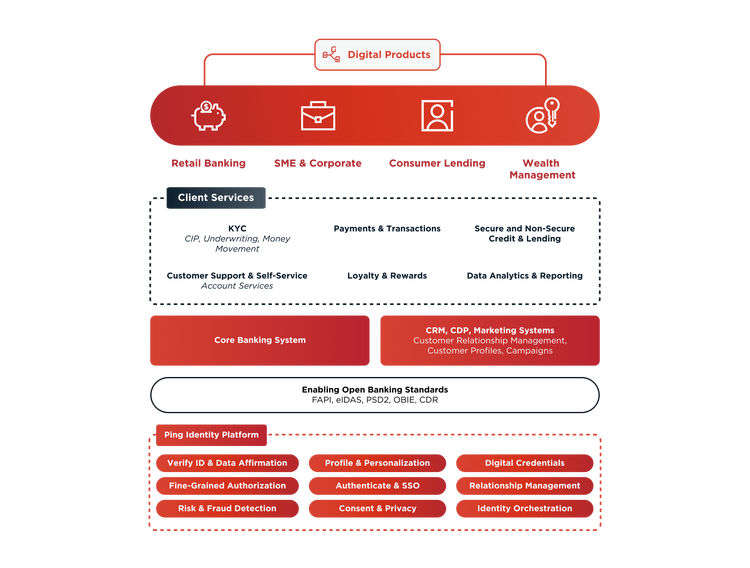
Figure 3. CIAM architecture for a typical financial service provider (co-developed with Deloitte)
Typical Solution Architecture for Open Banking Deployments
The Ping Identity solution architecture for a typical open banking deployment is intended to deliver secure, standards-aligned open banking capabilities that can be flexibly deployed alongside any existing CIAM system. Rather than replacing your current identity stack, this solution functions as a modular overlay, introducing key components such as PingGateway, a secure API enforcement point, and PingOne Advanced Identity Cloud, which delivers FAPI-compliant identity services (see Figure 4).
A core focus of the solution is enhancing CX through secure, seamless, and consent-driven data sharing. Unlike legacy IAM systems that treat consent as a simple binary choice, this solution supports domain-specific, dynamic consent flows, critical in open banking where decisions depend on fine-grained, authenticated data. Its standards-aligned architecture ensures consistent, low-friction access to financial services across third-party applications, embedded finance experiences, and web portals, meeting the expectations of digitally-native customers and fostering long-term engagement.
By externalizing identity logic and consent management into purpose-built components, you can reduce the attack surface and enforce least-privilege access principles for third-party providers, ensuring only authorized entities can access sensitive data and helping institutions maintain trust while accelerating their API monetization. Crucially, it allows financial service providers to focus on developing value-added, domain-specific APIs, while Ping Identity handles the identity, security, and consent management needed to safely power open banking at scale.
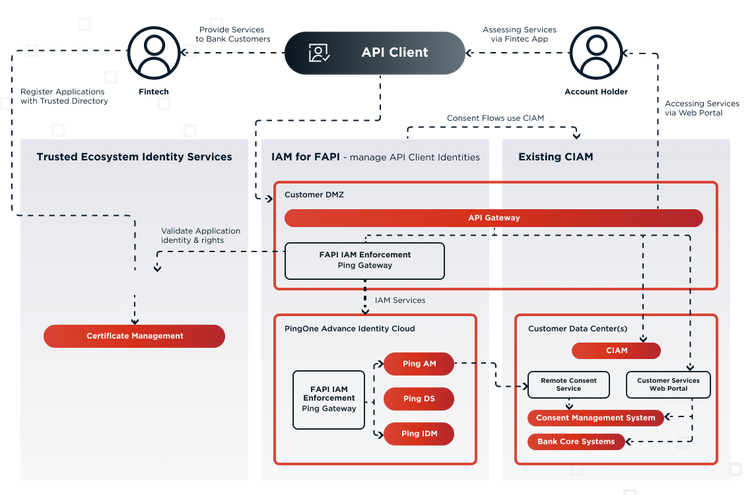
Figure 4. CIAM architecture for an open banking deployment
Section 05 – Experience Templates
Ping Identity provides multiple out-of-the-box orchestration templates to easily help customers begin building exceptional customer banking experiences. The available templates leverage PingOne DaVinci, Ping Identity’s orchestration engine, to enable developers and administrators to quickly test and deploy CX tailored for the financial services industry.
Click the “Download” links below to be taken to their marketplace listing. The listing will provide a “Download” button which saves the template to your local machine, which you can upload into your PingOne DaVinci environment.
To configure the template, click the link below under the column, “Documentation”, for any of the available templates. Documentation will include all components of the template, along with how to configure and run the template.
Make a great first impression with new clients looking to open an account.
Channel Controls
Give customers more control over their account settings by enabling them to specify whether or not they’re able to make online payments.
Transaction Approvals
Allow customers to set limits under account preferences that are enforceable when completing a transaction.
Data Sharing and Consent
Allow customers to provide or deny consent to sharing their financial data with third parties.
Passwords are the number one cause of breaches. Remove them altogether by offering more secure authentication methods that don’t require the saving or remembering of passwords.
Quickly recognize when high-risk activities occur from a new, unrecognized device or location and trigger additional security measures, like step up MFA or denying the event entirely, until further verification is provided. This additional layer of authentication stops scammers before the damage is done.
The Ping Identity Marketplace
To view our full list of out-of-the-box orchestration templates, including DaVinci flow templates and PingOne Advanced Identity Cloud templates, visit the Ping Identity Marketplace.
Developed by Ping Identity in partnership with Anish Srivastava, Deloitte Managing Director and CIAM Practice Leader.

Ping makes it possible to trust every digital moment. Our enterprise-grade identity platform secures customers, employees, partners, and non-human identities at scale across cloud, hybrid, and on-prem. From passwordless to AI-ready, we help you fight fraud, simplify access, and accelerate growth. With us, trust is built in. Learn more at www.pingidentity.com.