A New Standard for Biometrics
As organizations modernize digital experiences for customers, partners, and employees, identity assurance has become both more critical and more complex. Users expect fast, seamless access across devices and channels, while security teams must defend against increasingly sophisticated fraud, including phishing, account takeover, and AI-driven impersonation. At the same time, privacy and regulatory expectations continue to rise, placing greater scrutiny on how biometric information is processed and protected.
Traditional authentication methods struggle to meet these combined demands, forcing difficult tradeoffs. Passwords and one-time passcodes introduce friction and are easily targeted by attackers. Device-native biometrics, such as FaceID, are limited to a single device, rely on fallback credentials, and do not link back to the originally verified identity. Centralized biometric approaches that store biometric data on the cloud, improve usability but introduce new privacy, audit, and compliance risks by processing biometric information in ways that increase exposure.
In parallel, organizations are under pressure to reduce operational costs tied to passwords, one-time passcodes, and manual account recovery while maintaining strong, multi-factor identity assurance across digital journeys. Zero-knowledge biometrics introduces a different approach, one that delivers on all key fronts: security, privacy, simplicity, and operational costs.
Ping Identity Platform Enabled Zero-Knowledge Biometrics
Ping Identity extends its authentication and identification capabilities with zero-knowledge biometrics, enabling organizations to preserve user privacy while strengthening identity assurance at critical moments, such as login, step-up authentication, transaction approval, and account recovery—without introducing architectural complexity.
By integrating directly with Ping’s access management and identity capabilities, zeroknowledge biometrics fits naturally into existing identity flows, allowing organizations to apply biometric authentication where higher assurance is required, while continuing to leverage established policies, risk signals, and orchestration across the broader identity lifecycle.
As part of the Ping Identity Platform, zero-knowledge biometrics helps organizations elevate authentication assurance using privacy-preserving techniques alongside existing credentials and risk-based policies, extend strong identity assurance beyond account opening and registration into ongoing authentication, recovery, and high-risk actions, while reducing dependency on passwords and one-time passcodes, without disrupting existing IAM architectures.
This platform-based approach also supports consistent identity controls across customer, workforce, and partner use cases. Together, these capabilities allow organizations to adopt zero-knowledge biometrics incrementally, targeting high-risk scenarios first, while preserving flexibility, control, and alignment with evolving identity requirements.
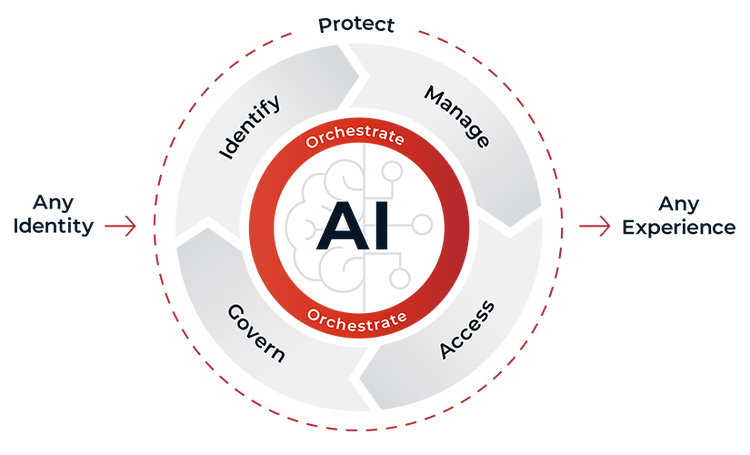
Zero-Knowledge Biometrics Capabilities
Zero-knowledge biometrics enables organizations to authenticate users with a single glance at the camera, matching both the user’s face and their device to the originally verified identity during each interaction, delivering true multi-factor authentication by design in a single, seamless step. Authentication is performed using privacy-preserving cryptographic techniques that ensure biometric information is never stored in a retrievable form. This information cannot be reconstructed or linked back to the original image, whether processed on the device or in the cloud. As a result, organizations can strengthen authentication without introducing centralized biometric repositories or requiring dedicated hardware.
Strengthen Identity Assurance
Maintaining trust in digital interactions requires confidence that the person authenticating is the same individual who originally enrolled, without relying on static credentials or creating privacy risk.
Genuine Identity Assurance
Authenticate the individual who enrolled, not just the device they are using, helping ensure the real person is present during each interaction.
Multi-Factor by Design
Each authentication verifies both inherence (face) and possession (device) in a single, seamless step.
Resilience Against Modern Attacks
AI-driven liveness detection and certified defenses help detect deepfake, presentation, and injection attacks without disrupting the user experience.
Deliver Frictionless Experiences
Security controls should not come at the expense of usability. Zero-knowledge biometrics is designed to strengthen security without adding unnecessary steps for users.
Fast, Intuitive Authentication
A single glance authenticates users in under a second.
Silent Enrollment For Existing Users
Users can be enrolled in the background using verified identity or employment images, increasing adoption and eliminating re-enrollment effort.
Secure Device Binding
New devices can be linked to a user’s account with a single glance, extending trust while limiting the scalability of remote impersonation and account takeover attacks.
Reduce Privacy Risk
Privacy expectations and regulations require organizations to minimize biometric exposure while still delivering secure authentication.
Privacy-Preserving Cryptography
Biometric information is protected using one-way cryptographic transformations that ensure it is never stored in a retrievable form.
Protection Across Environments
Biometric information cannot be reconstructed or linked back to the original image, whether processed on the device or in the cloud.
Compliance-ready architecture
Designed to support global privacy and security requirements, such as GDPR, PSD3, ISO/IEC 30107-3, CEN/TS 18099, and CCPA.
Flexible Deployment and Integration
Zero-knowledge biometrics integrates with existing IAM, CIAM, and identity verification environments, including Ping, without requiring architectural changes. It can be deployed consistently across mobile, web, shared-device, and frontlineworker environments to enhance identity assurance while preserving current investments. It supports a wide range of use cases, including:
- Login and step-up authentication
- Transaction and payment authorization
- Account recovery and device rebinding
- Frontline, workforce, and shared-device access
Business Impact, Delivered by the Ping Identity Platform
Zero-knowledge biometrics helps organizations strengthen identity assurance and reduce reliance on passwords, one-time passcodes, and manual recovery processes, improving security and user experience without increasing biometric exposure. Delivered as part of the Ping Identity Platform, this capability allows organizations to apply privacy-preserving biometric assurance within existing identity policies and workflows, lowering operational costs, reducing compliance and audit burden, and delivering consistent outcomes across customer, workforce, and partner use cases—all without introducing additional point solutions.