Zero-Knowledge Biometrics Benefits



Identity Assurance Challenges
As organizations modernize digital experiences for customers, partners, and employees, identity assurance has become more critical, and more complex. Users expect fast, seamless access across devices and channels, while security teams must defend against increasingly sophisticated threats, including phishing, account takeover, and AI-driven impersonation. At the same time, privacy and regulatory expectations continue to rise, placing greater scrutiny on how identity data and biometric information is processed, protected, and governed.
Traditional authentication approaches struggle to meet these combined demands. Passwords and one-time passcodes introduce friction, are costly to operate at scale, and are easily targeted by attackers. Device-native biometrics such as FaceID do not link back to the originally verified identity, are limited to individual endpoints, and rely on fallback credentials. Centralized biometric solutions that store biometric data on the cloud increase privacy, audit, and compliance risk by expanding biometric exposure. In parallel, organizations face pressure to reduce operational costs tied to authentication failures, manual recovery, and help-desk dependency—without weakening identity assurance or user experience.
Addressing these challenges requires an approach that strengthens identity assurance at critical moments, while fitting naturally into existing identity architectures.
Ping Identity Platform Enabled Zero-Knowledge Biometrics
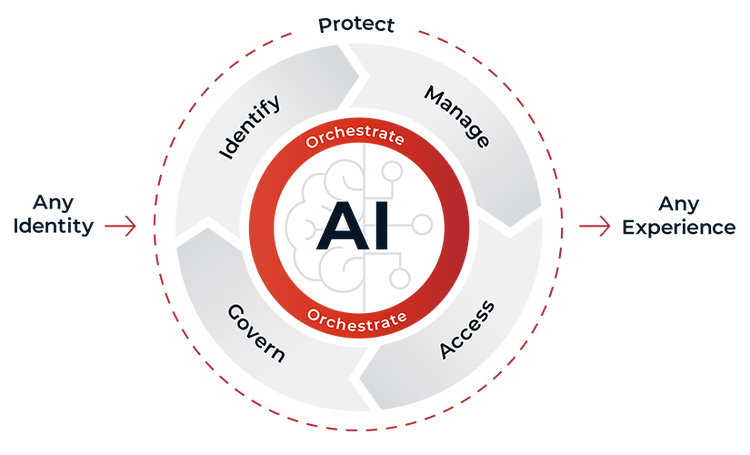
Zero-Knowledge Biometrics is delivered as part of the Ping Identity Platform, extending Ping’s authentication and identity capabilities with privacy-preserving biometric assurance. It enables organizations to strengthen identity verification with biometric authentication and re-verification at critical moments—such as login, step-up authentication, transaction approval, and account recovery—without introducing new biometric exposure or architectural complexity.
By integrating directly into existing Ping identity flows, organizations can apply biometric authentication and re-verification where higher assurance is required while continuing to leverage established policies, risk signals, and orchestration across the identity lifecycle.
Key Zero-Knowledge Biometrics Features

Genuine Identity Assurance
Secure Device Binding

Multi-Factor by Design
Login and Step-Up Authentication
Fast Biometric Authentication

Self-Service Account Recovery
Privacy-Preserving Cryptography

Compliance-Ready Architecture
AI-Driven Liveness Detection

Flexible Deployment