Traditional privileged access management (PAM) solutions were built to secure passwords. They vault credentials, rotate secrets, and log checkout activity. But modern breaches do not occur because vaults fail. They occur because attackers log in with valid credentials and operate inside trusted sessions.
The fundamental flaw of vault-centric PAM is not technological, but architectural. It assumes trust at login and loses meaningful control during the session. In cloud-native, hybrid, and distributed environments, this “admin time” model leaves organizations exposed to standing privileges, credential sprawl, and lateral movement.
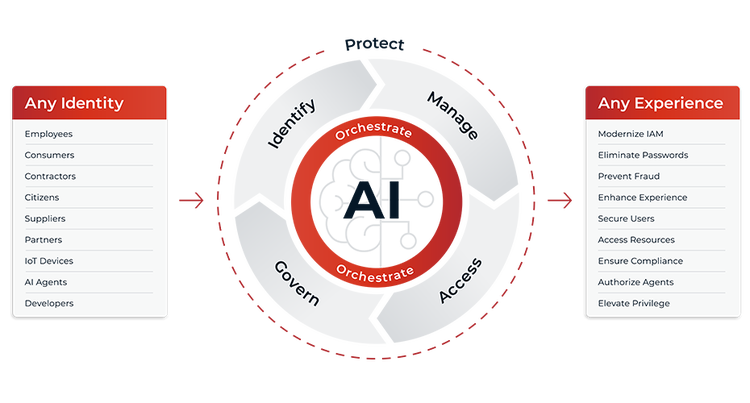
Privileged access is no longer a password management challenge. It is a runtime control challenge. PingOne Privilege moves beyond vault-centric PAM by eliminating static credentials for the vast majority of human access, enforcing Zero Standing Privilege as an operating model, binding identity to trusted hardware using TPM-backed assurance, and unifying privileged access within the broader Ping Identity Platform.
stat
95%
body
Eliminate static credentials for 95% of human privileged access with ephemeral, task-scoped runtime access that auto-revokes, shrinking attack surface and removing reusable secrets attackers can exploit.
Key Benefits
item-1-icon
item-1-icon-alt
decorative icon
item-1-title
Credential-Less, Runtime Privileged Access
item-1-description
Eliminate static credentials for 95% of human privileged access with ephemeral, task-scoped runtime access that auto-revokes, shrinking attack surface and removing reusable secrets attackers can exploit.
item-2-icon
item-2-icon-alt
decorative icon
item-2-title
Verified & Hardware-Based Assurance (TPM)
item-2-description
Close the identity-only gap with TPM-backed hardware assurance that cryptographically binds privileged sessions to a verified user and trusted device, preventing credential replay and stopping unauthorized access even if identities are compromised.
item-3-icon
item-3-icon-alt
decorative icon
item-3-title
Unified Identity Platform Integration
item-3-description
Extend privileged access beyond a siloed vault into a unified, identity-native control plane that integrates verification, governance, risk signals, and continuous authentication, enabling contextual, runtime authorization and step-up re-verification for high-risk actions.
card-1-image
card-1-title
Zero Standing Privilege Enforcement
card-1-hide-accent-bar
true
card-1-subtitle
card-1-body
Implement Zero Standing Privilege as an operating model. Access does not exist until requested. When granted, it is time-bound, granular, and automatically revoked at session end. No dormant administrator accounts. No persistent elevated roles. No residual risk.
card-2-image
card-2-title
Runtime Session Control & Ephemeral Access
card-2-hide-accent-bar
true
card-2-subtitle
card-2-body
Issue privileged access dynamically at runtime across cloud and on-premises environments, including servers (SSH/ RDP), databases, Kubernetes, IaaS consoles, and cloud-native resources. Enforce session-level controls with automatic expiration, approval workflows, and full session auditability.
card-1-image
card-1-title
Hardware-Bound Runtime Security
card-1-hide-accent-bar
true
card-1-subtitle
card-1-body
Protect privileged sessions with TPM-backed device assurance and phishing-resistant authentication, binding identity to trusted hardware while continuously evaluating user, device, and contextual risk during active sessions.
card-2-image
card-2-title
Unified Policy & Risk-Aware Decisioning
card-2-hide-accent-bar
true
card-2-subtitle
card-2-body
Leverage centralized policies and contextual intelligence to inform runtime access decisions. Integrate identity verification, governance, threat protection, and continuous authentication signals to enable adaptive, risk-based privileged access control.
card-1-image
card-1-title
Flexible Deployment Across Hybrid Environments
card-1-hide-accent-bar
true
card-1-subtitle
card-1-body
Support both agent-based and agentless deployment models. Enable seamless privileged access across hybrid and multi-cloud environments. Deliver secure access for admins, developers, IT, security, and remote teams without workflow disruption.
A New Model for Privileged Access Management
Unlike legacy approaches that focus on vaulting static credentials, PingOne Privilege is delivered as a universal service purpose-built for dynamic, cloud-native, and hybrid environments.
Its credential-less access model eliminates standing privilege for the vast majority of human access scenarios while integrating existing vaults only where necessary for bootstrap or break-glass use cases. This 95/5 approach reduces complexity, shrinks attack surface, and aligns privilege with real operational needs.
Privileged sessions are enforced at runtime, scoped to intent, and cryptographically bound to both a verified identity and a trusted device. Controls are applied continuously, not just at login. Privilege is ephemeral, contextual, and adaptive. By shifting from “admin time” to runtime enforcement, organizations dramatically reduce blast radius and eliminate the structural weaknesses of vault-centric PAM.
Seamless Identity Platform Integration
card-1-image
card-1-title
Identity Verification & Continuous Authentication
card-1-hide-accent-bar
true
card-1-subtitle
card-1-body
Ensure privileged users are verified at onboarding and throughout the session lifecycle. Support strong authentication methods and step-up verification tied to risk signals and sensitive commands.
card-2-image
card-2-title
Unified Governance & Threat Protection
card-2-hide-accent-bar
true
card-2-subtitle
card-2-body
Align privileged access with governance policies and Zero Trust principles. Incorporate risk signals from identity systems, device telemetry, and fraud engines to influence real-time authorization decisions.