CX Is Your Competitive Advantage
What do the most successful retailers have in common? The answer isn't low prices – it's happy, loyal, repeat customers. Today's shoppers have sky-high expectations for convenience, ease of use, data privacy, and personalization. Retailers that deliver on those expectations can reap the rewards of long-term loyalty: a higher likelihood of future purchases, bigger average order sizes, lower cart abandonment, and brand advocacy.
So, what makes for consistently excellent experiences? It all starts with identity. When you know who your customers are and what they like – and use that knowledge to make shopping easy and enjoyable across every channel – you're building the foundation for business success.
Let's look at four ways identity can help you create customer experiences that will have shoppers coming back for more.
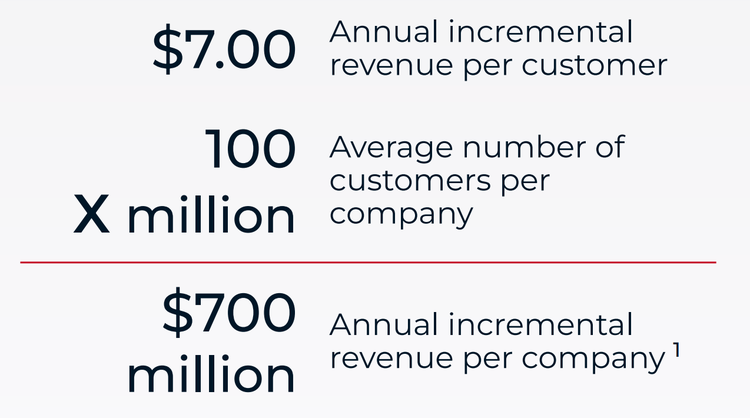
The Impact of Improving Your CX Index Score by Just 1 Point
Reimagine Checkout to Decrease Cart Abandonment
The average cart abandonment rate is over 70%, leaving millions in potential revenue unrealized. Why do customers abandon their carts at checkout? The top five reasons for cart abandonment are:
- Unexpected extra costs were too high
- Delivery was too slow
- Didn't trust the site with credit card information
- Account creation was mandatory
- Checkout process was too long/complicated
The first two items on this list are self-explanatory, but the rest are CX blunders that can be solved with customer identity and better user journey design.
How can retailers create a better checkout experience?
- Keep it short and simple. Minimize the number of clicks needed and only ask for the information required to process the order.
- Take the stress out of payment. Secure customer payment information and offer a variety of payment options to suit customer preferences, including social payment options that don't require the customer to give you a credit card number directly.
- Reconsider mandatory registration. Secure guest checkout is possible, and customers who have a positive guest experience are more likely to return and register, especially if they're offered an incentive after purchase.
- Keep fraud checks unintrusive. Extra security steps throughout the shopping process can lead to a cart abandoned in frustration. Rely on passive checks and give legitimate customers an easier path to checkout while effectively spotting and stopping bad actors.
Simplify Registration to Improve Customer Acquisition
Customers are wary of offering their information to retailers, with 69% stating online shopping is the activity that makes them feel most vulnerable to identity theft.⁵ Registration feels like a big commitment, and many shoppers will abandon their carts, if it's required. Those that are willing to fill out a form may still walk out in the middle of registration, if it feels too cumbersome – and yet registration is the critical first step toward building long-term customer loyalty.
How can retailers convince new customers to take a chance on them? It comes down to the registration experience. When signing up is quick and easy, customers are more likely to do it.
Get it right, and you'll meet your customer acquisition goals with ease.
What does a good registration experience look like?
- You don't need as much information as you think. Start with an email address and a password, if you're using them. Collect more information over time with progressive profiling.
- Passwords are optional. Speaking of passwords, consider eliminating them altogether – passwordless registration and login can be more secure while also avoiding the pain of having to remember yet another set of credentials.
- Social login can smooth the way. Let customers register with an existing social account instead of creating new credentials.
Make Shopping Easier to Cultivate Loyalty
Customer acquisition may be important, but keeping existing customers happy is the secret to healthy revenue growth in retail. When 41% of ecommerce revenue comes from the top 8% of customers and over 35% comes from just the top 5%, satisfying those return shoppers becomes critical. And yet, a first-time buyer has only a 27% chance of purchasing again; a likelihood that rises to 62% after the third purchase.⁵
Why do existing customers leave? It often comes down to the experiences they have when interacting with your brand. Inconsistency across channels, lack of support for hybrid options, weak personalization, and complex checkout processes are some of the reasons a customer might decide to shop with your competitor instead.
How can retailers improve the shopping experience for repeat customers?
- Keep customers signed in. Long-lasting sessions are a proven way to increase the likelihood of repeat purchases. Use passive fraud checks and behavioral analytics, instead of asking for a login every time, to keep customer accounts safe and remove a key barrier to checkout.
- Create better customer profiles. A unified customer profile across every channel, integrated with martech and customer relationship management (CRM) data, can lay a strong foundation for better personalization to make your customers feel like you know and understand them.
- Don't treat your most valuable customers like criminals. Ecommerce fraud is a big problem, but stopping it doesn't have to mean endless security steps. Scan for fraud across the entire user session and step up security only when you detect elevated risk. Let low-risk users shop uninterrupted.
- Pivot when something isn't working. Quickly design, deploy, and test journeys. Make changes quickly when you see excessive drop-off at any point in the journey, and iterate continuously.
Embrace Hybrid Retail for Better Omnichannel Engagement
Shoppers use a variety of channels to research and finalize their purchases, and retailers must be ready to meet them where they are. The likelihood of customer loyalty goes up from 33% to 89% with strong omnichannel engagement, and customers shopping across both online and offline channels have a 30% higher lifetime value. Hybrid shopping options like buy online, pick up in store (BOPIS), curbside pickup, virtual try-on, and social commerce are gaining popularity steadily.
The key to getting hybrid shopping experiences right lies in unifying customer identity data and access across every channel. The best part? This doesn't just delight the 27% of consumers who are hybrid shoppers today – it improves the experience for all customers, regardless of channel.⁸
How can retailers take the headache out of hybrid?
- Unify customer data across channels. Whether customers interact with you via web, mobile, in-store kiosk, or any other touchpoint, ensure you have all their data available in one place.
- Create consistency across channels. The customer should be able to smoothly move between channels without jarring transitions, preserving their cart and shopping history.
- Be thoughtful about when and how you verify. Security is important, but re-verifying a customer's identity every time they move between channels creates unnecessary friction.
Identity Is a Game-Changer for Retail Experiences
Your customers are just one bad experience away from abandoning their cart – or their account. In the competitive retail landscape, identity is your secret weapon to make amazing first impressions and keep customers coming back for more. A modern customer identity and access management (CIAM) solution doesn't just secure your apps. It enables smoother checkouts, increased customer acquisition, improved personalization and scale, and ultimately higher customer lifetime value.
Ping makes it possible to trust every digital moment. Our enterprise-grade identity platform secures customers, employees, partners, and non-human identities at scale across cloud, hybrid, and on-prem. From passwordless to AI-ready, we help you fight fraud, simplify access, and accelerate growth. With us, trust is built in. Learn more at www.pingidentity.com
References
¹ Forrester: Transformation: How Customer Experience Drives Business Growth
2 Semrush
3 PwC
6 Smile.io